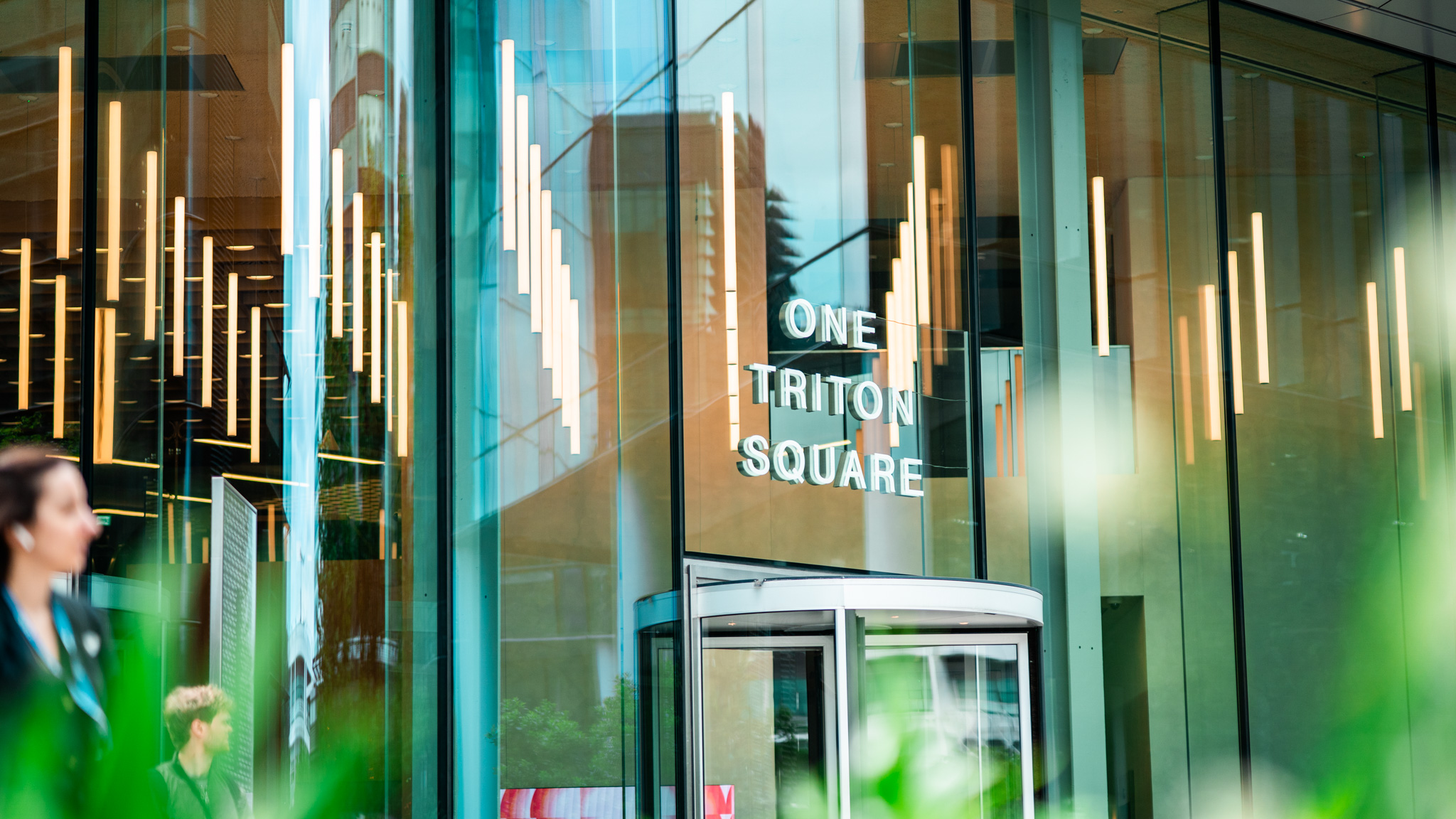
One Triton Square joins London’s best-connected buildings with Vorboss 100Gbps connectivity through British Land partnership
There's an exciting new feature coming to Microsoft's Edge browser that’s going to make your life - and your employees' lives - a whole lot easier. 'Draft with Copilot' is an AI-powered tool that can instantly write text on any topic you need.
When you're in Edge and you find yourself staring at an empty text field (like the body of an email or a comment box), just right-click. You'll see an option to 'Draft with Copilot.'
Click on it, and a window will pop up. You just enter the subject or topic you need text for, hit 'Generate,' and watch Copilot do its thing. In a few moments, you'll have a piece of text on the topic you specified.
You can then change the tone and length of the generated text to suit your style. Want it to be more formal or casual? Need it longer or shorter? No problem.
We all know time is money, ’Draft with Copilot' can help save you both. Imagine how much time your team spend on writing everyday text. With Copilot, drafting a quick email or coming up with a social media update becomes easier.
And Copilot not only helps you write faster but also makes sure the text is grammatically correct and well-structured. This is especially helpful if you're writing in a language that's not your native one.
Right now, this feature is only available in US English, but Microsoft is working on expanding it to more languages.
One warning: It's important to review what it produces. Critics of AI-generated text sometimes say it can feel a bit generic. You might want to add a personal touch or specific details to make it more engaging for your audience.
This feature is currently in the Edge Canary preview build, which means it's still being fine-tuned.
Microsoft is steadily integrating Copilot into more Windows apps, making these AI tools more accessible and versatile across different platforms. It's clear that the future holds even more convenient AI-assisted features that will make our digital lives easier.
Not tried Copilot in your business yet? We can help you get started. Get in touch
Microsoft has issued an important update: If you’re using Windows 11, you need to upgrade to version 23H2 before 8th October 2024. After this, older versions will no longer receive essential security updates, putting your systems at risk.
Why is this important?
Because Microsoft will stop supporting older Windows 11 versions for business accounts. This includes stopping security updates, which are vital for protecting your systems against the latest cyber threats.
The latest version includes advanced security features to protect against new threats, making sure your business data remains safe. But updating to Windows 11 version 23H2 brings other benefits beyond security.
You’ll also notice performance improvements, making your systems run faster and more efficiently, which is great for productivity. Plus, new tools and features are continually added, helping streamline your workflows and improve overall efficiency. Staying updated ensures compatibility with new software and technologies, maintaining smooth business operations.
Delaying the update could leave your business vulnerable to cyber attacks. Without security updates, your systems will be exposed to potential exploits, risking data breaches and financial loss.
Microsoft typically enforces updates post-deadline to keep people safe, especially for business devices not managed by IT departments. While this is helpful, it’s better to update proactively on your own schedule.
Updating to version 23H2 is straightforward.
- First, check your current version by going to Settings, then System, and selecting About.
- Before updating, make sure to back up all your important files to prevent data loss.
- Navigate to Settings, then Update & Security, and select Windows Update.
- Click on "Check for updates" and follow the prompts to install version 23H2.
- Once the update is complete, restart your computer and verify the new version in Settings, System, and About again.
Making sure your systems are up to date will keep your business secure and running efficiently. Don’t wait until the last minute… upgrade to Windows 11 version 23H2 now.
Keeping businesses protected and productive is our top priority. So, if you need any help with that, get in touch.
Imagine waking up one morning, turning on your computer, and finding that all your important files – everything from customer data to financial records – are locked. Tight.
And then a scary message pops up demanding a ransom fee to unlock them.
That’s ransomware in a nutshell. It’s a type of malicious software that hijacks your data and holds it for ransom.
It usually starts with an innocent-looking email or link. You might get an email that seems legitimate, asking you to click on a link or open an attachment.
This is known as a phishing email, where the sender appears to be genuine but isn’t. Once you click, malicious software is silently installed on your system. From there, the cyber criminals quickly go to work.
They’ll be encrypting your files so you can’t access them. Then, you get that dreaded ransom note, demanding payment in exchange for a decryption key to unlock your files. Paying the ransom is a risky move because there’s no guarantee you’ll get your data back, and it just encourages the attackers to target more victims.
2023 was a particularly bad year for ransomware, with attacks surging after a two-year decline. According to a report, there was a huge increase in ransomware incidents, breaking a six-year record.
One reason for this spike is the rise of something called Ransomware-as-a-Service (RaaS). This model lets cyber criminals "rent" ransomware tools, making it easier than ever for them to launch attacks.
As a result, more businesses are finding themselves posted on data leak sites, with a 75% increase in the number of victims between 2022 and 2023.
Ouch.
And it gets worse. Attackers are getting smarter. They’re developing new variants of old ransomware, sharing resources, and using legitimate tools for malicious purposes.
They’re also working faster, often deploying ransomware within 48 hours of gaining access to a network. And they tend to strike outside of work hours, such as when you’re tucked up in your bed, so they’re less likely to be noticed.
If your business falls victim to a ransomware attack, the consequences can be devastating. You might face significant financial losses, not just from the ransom itself but also from the cost of downtime and recovery.
There’s also the risk of losing critical data if you can’t decrypt your files.
Your reputation could take a hit if customers find out their information was compromised. Oh, and your business operations could be severely disrupted, affecting your ability to serve your clients.
The most important question then: How can you protect your business from this growing threat?
- Start by educating your team. Make sure everyone knows how to spot phishing emails and avoid suspicious links and attachments
- Regularly back up your critical data and securely store those backups offline
- Keep your software and systems up to date with the latest security patches, and invest in strong security tools
- It’s also important to limit access to your data. Only give employees access to the information they need for their jobs
- Monitor your network for unusual activity and have a plan in place to respond to incidents quickly
If you do get hit by a ransomware attack, don’t panic. Work with cyber security experts (like us) to resolve the issue.
Remember, it’s best not to pay the ransom, as it only fuels the cyber criminals’ activities.
My team and I help businesses take proactive action to protect their data. If we can help you, get in touch.
If you use Google Chrome in your business, you’re probably familiar with extensions. These useful tools can enhance your browsing experience in countless ways, from blocking annoying ads to reducing distractions.
Extensions are incredibly popular because they can add so much functionality to your browser. But just as you need to be careful when installing new apps on your phone, you must also be cautious when adding new extensions to your browser. That’s because they come with a risk of malware.
It’s short for malicious software – that’s any software intentionally designed to cause damage to a computer, server, or network. Cyber criminals use malware to steal data, hijack systems, and even empty your bank accounts.
Google Chrome holds about 65% of the browser market share worldwide, making it the most popular browser by far. This popularity makes Chrome a prime target for cyber criminals. While cyber attacks sometimes exploit vulnerabilities in the browser itself, there’s an easier way to target Chrome users: Through malicious extensions containing malware.
Although Google keeps a tight watch on its Chrome Web Store, the risk is still there. A recent report claims 280 million people installed a malware-infected Chrome extension between July 2020 and February 2023. That’s a huge number and highlights the importance of being vigilant.
Surprisingly, many malicious extensions remained available for download on the Chrome Web Store for a long time. On average, malware-filled extensions stayed up for 380 days, while those with vulnerable code were available for about 1,248 days. One particularly notorious extension was downloadable for 8 and a half years before being removed.
So, how can you protect yourself and your business from these malicious extensions? Here are five steps we recommend.
- External reviews: Since checking ratings and reviews on the Chrome Web Store isn’t always reliable (many malicious extensions don’t have reviews), look for external reviews from trusted tech sites to judge whether an extension is safe.
- Permissions: Be cautious if an extension asks for more permissions than it should. If a new extension requests extensive access to your data or system, this could be a red flag.
- Security software: Use robust software to catch malware before it can do any harm. This is your last line of defence if you accidentally install a malicious extension.
- Necessity: Before installing any new software or browser extensions, consider whether you really need it. Often, you can achieve the same functionality visiting a website.
- Trusted sources: Only install extensions from trusted sources or well-known software providers. This significantly reduces the risk of downloading a harmful extension.
Chrome is the most popular browser, which means it will always be a target for cyber criminals. Google’s security team works hard to review every Chrome extension to ensure they are safe, but it’s still crucial to be vigilant.
If you’re unsure whether your extensions are safe or not, or you’d like more advice around keeping your business secure, our team can help. Get in touch.
Microsoft recently announced that all Azure sign-ins will soon require multi-factor authentication (MFA) to boost security. Even if you don’t use Azure, a cloud computing platform, this is something you should pay attention to. Because MFA is one of the simplest and most effective ways to protect your digital assets.
What is multi-factor authentication? Think of it like adding an extra security measure to the door of your business.
Normally, you log into your accounts with just a password. But passwords aren’t as safe as they used to be; cyber criminals are good at cracking them. MFA adds another layer of security. It’s like saying, “OK, you have the key, but I’m going to need to see some ID too.”
After entering your password, you’re asked to verify your identity a second time. This could be a code sent to your phone, a fingerprint scan, or a quick tap on an app like Microsoft Authenticator. It’s an extra step, but an important one. Even if someone manages to steal your password, they’d still need this second form of verification to get into your account. That’s a massive roadblock.
Yes, adding another step to your sign-in process might sound like a hassle. But the reality is, it’s a small inconvenience that can save you a lot of trouble down the road. Imagine the fallout if someone gained access to your sensitive business information. The cost of a breach, in terms of both money and reputation, is much higher than the few extra seconds it takes to use MFA.
There are a few different ways to set up MFA. Some people prefer getting a one-time passcode via text message, while others like the convenience of a push notification on their phone. Biometric options, like fingerprints or facial recognition, are also becoming more common. And for those who want something extra secure, there are physical security keys that plug into your computer.
Microsoft’s push for MFA with Azure is just the tip of the iceberg. The truth is this kind of security measure is a business security basic.
Need help setting this up and making it easy for your business? It’s what we do. Get in touch.
If you’re like most people, you probably find system updates a hassle. They take ages and those big downloads eat up precious bandwidth and storage.
Good news then: Microsoft is about to make your life a whole lot easier with the upcoming Windows 11 24H2 update.
It’s introducing something called ‘checkpoint cumulative updates.’ That might sound a bit technical, but don’t worry – it’s simple and very beneficial.
Normally, Windows gets its updates every month. These are known as cumulative updates, which bundle all the latest fixes and enhancements together. These bundles can be large and take a while to download and install.
The new checkpoint cumulative updates change this process. Instead of downloading a big update every time, your system will now receive smaller updates more frequently. These are tweaks to the last major update or checkpoint.
So, what does this mean for your business? It’s great news… you’ll spend less time waiting for updates to finish so you can get back to work.
And, if you have a limited internet connection, smaller updates are a blessing. They use less bandwidth, so less chance of interrupting someone else’s video call.
The best part? All of this happens automatically through Windows Update. You don’t need to do anything differently. Your system will keep running smoothly, with most updates happening in the background. This seamless experience ensures that your work is not interrupted.
This isn’t the first time Microsoft has streamlined updates. When Windows 11 was first launched, Microsoft used new compression technology to reduce the size of updates by 40%. With the 24H2 update, they’re taking it a step further to ensure that your experience is even more efficient.
It’s also worth noting that while this new update system will be standard for Windows 11 and the upcoming Windows Server 2025, it’s less likely to be implemented for Windows 10, as that version is nearing its end of life. This means there’s even more incentive to upgrade your business to Windows 11 if you haven’t already.
Want to migrate to Windows 11 with zero hassle? We’re the people to talk to.
Latest from the press room
London, UK, 13 August 2026:
Vorboss, which owns and operates London’s dedicated business fibre network, has connected One Triton Square at Regent’s Place with 100Gbps connectivity, delivering exceptional digital capacity to one of the capital’s most exciting new destinations for science, technology and innovation.

The flagship British Land and Royal London Asset Management building provides more than 300,000 sq ft of purpose-built space, bringing together fitted laboratories, flexible workspace, premium dedicated offices, and shared meeting and event space.
Located in the heart of London’s Knowledge Quarter, One Triton Square is designed to support ambitious businesses at every stage of growth. Flexible floorplates, advanced digital infrastructure and exceptional on-site amenities create an environment where emerging organisations can scale alongside established global leaders. It is workspace built for collaboration and long-term success.

100Gbps is independently available on each floor, providing the capacity occupiers need to support increasingly data-intensive work and emerging technologies. The 100Gbps connection further reinforces One Triton Square’s position as a future-ready commercial destination.
Rhod Morgan, Co-CEO, Vorboss adds:
“Connecting One Triton Square with 100Gbps gives its occupiers the capacity they need not only for the way they work today, but for the technologies and opportunities that come next. It perfectly complements the vision British Land and Royal London Asset Management had for the building – a space designed around the needs of ambitious, innovation-led organisations”
“One Triton Square sits at the centre of London’s science and technology ecosystem, and we’re incredibly proud to be providing the infrastructure it needs to thrive.”
Simon Hepher, Head of Asset Management, Regent’s Place and Innovation Assets, British Land:
“One Triton Square is a landmark new building at the heart of Regent's Place, designed to support ambitious businesses at every stage - from agile start-ups to established global leaders. Alongside best-in-class laboratories, workspace, and offices, the building will now also offer some of the best digital connectivity in London, with 100Gbps providing occupiers the capacity they need for increasingly data-intensive work as they scale and grow.”
Mark Carroll, Property Development Director, Royal London Asset Management:
“As a long-term investor, we are focused on creating places where businesses can thrive. This investment in digital infrastructure further enhances One Triton Square's appeal to science, technology and innovation-led occupiers and supports its long-term success.”
The connection at One Triton Square forms part of Vorboss’ commitment to ensuring London has the serious digital infrastructure required to remain a leading global centre for business, science and technological innovation.
Ends.


The experience driving our growth
David has been central to our success as our Chief Financial Officer. Drawing on his experience at Zayo Group and RBC Capital Markets, he brings strong insight across large-scale infrastructure, investment banking and managed services. As our CFO, he’s been instrumental in shaping a commercial model that supports businesses as they grow, giving our customers the certainty and simplicity they expect.
Rhod has played a pivotal role in operations at Vorboss since 2020. He led the build of our network, now spanning over 900 km, and has raised industry standards across quality and efficiency, making sure our customers have a flawless experience. With previous roles at companies like Arup and WeWork, Rhod understands the complexity of London commercial real estate and knows exactly what it takes to deliver world-class technology in a fast-paced city.
The next chapter
Under David and Rhod’s leadership, we are doubling down on our commitment to keep things simple for our customers and remain the transparent, accountable provider ambitious businesses rely on as they grow.
“Vorboss is on path to becoming one of the UK’s leading B2B connectivity and managed service providers,”
says Adam Dunlop, Operating Partner at Octopus Capital and Chair of the Vorboss Board.
“With David and Rhod’s leadership, and the strength and commitment of the team across the business, I am genuinely excited about what lies ahead.”
Vorboss is part of the Fern Trading Group, managed and advised by Octopus Investments. This partnership, backed by £250million in funding, enabled us to build an independent, 100Gbps London fibre network and connect thousands of businesses across the capital. Having expanded our offering with a range of cybersecurity and managed technology solutions last year, we continue to do things differently by delivering everything end-to-end through our in-house teams.