One Triton Square joins London’s best-connected buildings with Vorboss 100Gbps connectivity through British Land partnership
Do you feel like cyber attacks are becoming more frequent?
You're not imagining it.
Cyber attacks are indeed on the rise and have become the top concern for many businesses globally. From ransomware and data breaches to IT disruptions that halt operations, these threats are causing sleepless nights for business owners – and for good reason.
Imagine losing access to your customer database, having sensitive information leaked, or being locked out of your systems until a ransom is paid. These scenarios are not just hypothetical; they are the daily reality for businesses of all sizes.
The impact of a cyber attack on your business can be devastating, leading to financial loss, a damaged reputation, and costly downtime while you recover.
Advancements in technology, particularly artificial intelligence (AI), have equipped cyber criminals with more sophisticated tools, making it easier for them to launch attacks.
Cyber incidents are a major cause of business interruption, where operations come to a standstill due to unexpected events like glitches and cyber attacks. As our reliance on digital tools grows, so does the need to protect them.
But there's good news. While cyber threats are evolving, so are the tools designed to combat them. AI-powered technologies can provide better insights, detect threats earlier, and enable faster responses.
However, even with advanced tools, the human element remains crucial. Your employees need to understand the risks and be trained to recognize potential threats, whether it's a suspicious email or unusual activity in your systems.
So, how concerned should you be about cyber attacks?
Very.
But that's a good thing. The more aware you are of these serious threats, the better you can protect your business. The key is to be proactive. Stay informed, invest in strong security measures, and make your team one of your greatest defenses.
If this sounds overwhelming, don't worry; we can help prepare your employees and make your systems safer. Get in touch.
The way we work has changed dramatically over the past few years, hasn’t it? The global pandemic created a huge shift towards remote working, and now businesses are divided on the right way to move forward.
Some businesses are eager to bring everyone back to the office, while others are keen to keep things flexible. If you’re wondering what’s best for your business, it may be time to look at the big picture: What works, what doesn’t, and what do you need to keep an eye on?
Let’s face it, working from home has its perks. No commute, fewer interruptions, and a chance to keep up with the laundry between meetings. For many employees, it can boost productivity, improve work-life balance, and reduce stress.
But remote working isn’t just about employee happiness.
Businesses forcing staff back into full-time office work are losing people – particularly their top talent. A recent study found that companies with strict Return to Office policies saw a 14% jump in employees quitting… and these aren’t the ones you can replace in a snap. We’re talking about senior staff and highly skilled workers who take a lot of knowledge with them.
On top of that, finding new people to fill those roles is taking longer (23% longer, according to the report). And it’s not cheap to hire replacements, either. Today’s employees want flexibility, and businesses offering remote or hybrid roles are getting a recruitment advantage.
Where things get difficult is around the issue of data security. Although working from home or a coffee shop might sound great, public Wi-Fi can be like an open door for cyber criminals.
Your business data could also be at risk if your employees work from their personal devices (which might not have seen a software update in months) or if they work from a home PC they share with their partner or kids.
The good news is that there are some simple ways to protect your business while allowing your employees to work flexibly.
Extra security measures like multi-factor authentication (that extra code you’re asked to enter when you log in) can help to keep things locked down. And a little training to teach your team how to spot email scams can also make a huge difference.
So, should you bring your employees back to the office or embrace remote working? There’s no “one-size-fits-all” answer.
Some businesses thrive with everyone in the office, while others find that giving people the choice brings out the best in their employees. The real trick is finding what works for your team.
Just remember: If you’re letting people work from anywhere, don’t skimp on security. A flexible approach with strong protections can give you the best of both worlds – happy employees and a secure business.
If you’d like advice on how to keep your business data secure while supporting flexible working, we can help. Get in touch.
If you’ve ever used Incognito mode in Chrome, you probably know the basics: it lets you browse without saving your history, cookies, or other temporary data.
But was it ever truly private?
Not entirely…
Until recently, if you copied something from an Incognito tab, like text, an image, or a web address, Windows could still save it in your clipboard history and even sync it to other devices.
Not exactly what you might want from a “private” browsing session, right?
Microsoft has quietly stepped in to fix that loophole, making Incognito mode even more private.
When you open an Incognito tab in Chrome (or InPrivate mode in Edge), your browser stops saving:
- Your browsing history (so nobody else using your device can see what websites you’ve visited)
- Cookies and site data (so websites won’t remember you after you close the tab)
- Form data (so your browser won’t autofill your details next time)
This can be handy for things like:
- Checking flight costs or hotel bookings without tracking cookies causing price hikes
- Logging in to multiple accounts without having to sign out
- Using a shared computer without leaving a trail
Let’s say you’re copying confidential business information or a personal message while in Incognito mode. Before this update, Windows would have saved that copied text in your clipboard history, meaning anyone who pressed Windows Key + V later could see it.
Even worse, if you had Cloud Clipboard enabled (which syncs clipboard data between Windows devices), your copied content could end up on another device entirely.
Microsoft spotted this issue and patched it, making sure that when you copy something in Incognito mode, Windows won’t save it to your clipboard history or sync it to the cloud.
So now, your activity truly disappears when you close the tab (Google has since picked up this change and rolled it into Chrome updates for everyone).
Meanwhile, Microsoft has made another small but useful privacy improvement: media previews are now hidden when using Incognito mode.
Normally, when you play a YouTube video (or any media) in Chrome, Windows shows a preview of what’s playing whenever you adjust the volume or check the media panel. If you’re on the lock screen, it even shows details like the video title and artwork.
Watching something in Incognito? Thanks to the update, now it just says, "A site is playing media.” No titles, no thumbnails, no details.
This means that if you’re watching a sensitive video (business-related or otherwise), there’s no accidental exposure if someone else glances at your screen.
If you use Incognito mode for private browsing, you’re now getting better protection than before, even if you didn’t realize there was a problem in the first place.
But remember: Incognito mode still doesn’t hide your activity from your internet provider, work network, or the websites you visit. It’s great for local privacy on your device, but it won’t make you completely anonymous online.
If you need help making sure your sensitive business data stays private, get in touch.
Spreadsheets have been a go-to business tool for decades now. They’re familiar and easy to use (and if we’re being honest, we can all feel like a bit of a genius when we get that one formula to work, right?).
The problem is, 90% of businesses are still relying on outdated spreadsheets to manage important data, even though they’re slowing things down and increasing the risk of errors.
Think about it: How often do you get stuck manually entering data, fixing mistakes, or trying to figure out if you’re looking at the latest version of that important spreadsheet? It’s so frustrating – and you’re not alone.
Research shows that although 82% of businesses have automation on their roadmap, only 43% plan to implement it in the next year. This means that many businesses are still dealing with the same spreadsheet-related headaches, when they could be working much more efficiently.
So, how could automation help your business?
Instead of spending hours plugging in numbers and double-checking calculations, automation tools can handle data collection, processing, and reporting for you. That means fewer mistakes, less time wasted, and real-time updates that keep everything running smoothly.
Automation tools also come with built-in security features, so you don’t have to worry about who has access to what.
Despite all these benefits, a lot of businesses are hesitant to make the switch. Spreadsheets feel safe and familiar, and change can be intimidating. But sticking with outdated tools is holding you back.
The good news is you don’t have to overhaul everything overnight. Start small. Look at the areas where automation could save you the most time and hassle, like payment tracking, customer data, or reporting.
Once you see how much easier things get, you’ll wonder why you didn’t switch sooner.
If you’re ready to see how automating some of your business processes could improve productivity, we can help. Get in touch.
Ever needed to quickly convert a file, say, from a Word doc to a PDF? And found yourself Googling for a free tool to do it?
It seems harmless enough, right?
A quick download, a fast conversion, job done.
But what if I told you that one small click could secretly open the door to ransomware or data theft?
That’s exactly what the FBI is warning about right now. Yes, the FBI.
A file converter does exactly what it says. It takes a file in one format and turns it into another. Maybe you’ve got a PowerPoint that needs to be turned into a PDF for a client. Or you’ve got a bunch of images you want to bundle into a single document.
These tools are often free, and they work. But that’s where the danger lies. Because some of them come with strings attached.
Cyber criminals are using some of these free converters as a cover for more sinister activity. While the tool does what it promises, behind the scenes, it may also be installing something nasty on your system. Such as malware or even ransomware.
What does that mean?
Malware is malicious software. It’s designed to do something harmful without your permission. It might steal your data, spy on your activity, or mess with your files.
Ransomware is one of the worst types of malware. It locks your files so you can’t access them, then demands a payment (usually in cryptocurrency) to unlock them. It’s like someone sneaking into your office overnight, putting all your important documents in a safe, and then charging you to get the key.
Worse still, these tools can also scan the files you upload and scrape them for sensitive information. That could be things like your passwords, banking details, or even personal data. If you’ve ever uploaded something with a customer list, an invoice, or employee details, that’s the kind of gold cyber criminals are after.
The problem is these tools often look perfectly legitimate. And they do what they say on the tin, which makes them hard to spot. That’s why it’s so important to be cautious.
If your business needs quick file conversions, it’s far safer to use trusted, professional tools. The kind that come from known software providers, not random websites you find in a pinch.
Knowing how these scams work is your first line of defence. So, if you or your team ever use online tools like this, it’s worth reviewing where they come from… and whether they’re putting your business at risk.
Need help setting up safe, secure software alternatives for your team? We can do that – get in touch.
Imagine arriving at work tomorrow to find all your files gone.
Not just missing—but encrypted. Locked away by cybercriminals demanding a hefty ransom to release them.
This isn’t a hypothetical. It’s ransomware. And it’s escalating.
In the first quarter of 2025 alone, ransomware attacks surged by 84% compared to the same period last year.
It’s no longer a question of if your business will be targeted, but when.
In fact, two-thirds of businesses have already been hit in the past two years. It’s a sobering statistic—and a wake-up call. Is your business prepared?
Here’s the good news: there’s a highly effective way to protect your data—immutable backup storage.
But before we get to that, a quick reminder of what ransomware is: a cyberattack where criminals infiltrate your systems, encrypt your data, and demand payment to unlock it.
It’s brutal. And it’s evolving.
Today’s attackers don’t just go after your live data—they target your backups too. Research shows that 96% of ransomware victims in the last two years had their backups compromised.
That’s why immutable backup storage is so critical.
“Immutable” means unchangeable. Once your backup data is written, it can’t be altered, deleted, or overwritten—not even by someone with admin rights.
So even if attackers breach your systems, they can’t touch these backups. It’s like locking your most valuable data in a vault—one that only you can open when needed.
Traditionally, this meant using air-gapped, offline storage. But now, cloud-based solutions offer the same level of protection—without the hardware headaches.
So why isn’t everyone using it?
Despite 81% of IT professionals agreeing it’s the best defence against ransomware, only 59% of businesses have adopted it. That gap is worrying.
Security hardening—firewalls, antivirus, access controls—is essential. But if ransomware gets through (and it often does), your backups are your last line of defence.
They need to be untouchable.
It’s about adopting a “breach mentality”—assuming an attack will happen, and planning for recovery, not just prevention.
Investing in immutable backup storage is one of the smartest moves you can make. When the worst happens, being able to restore your data quickly—without paying a ransom—could be the difference between a bad day and a business-ending disaster.
Need help getting started with immutable storage or reviewing your backup strategy? My team and I are here to help. Let’s talk.
Would you like this adapted for a specific format—like a blog post, email campaign, or internal presentation?
Latest from the press room
London, UK, 13 August 2026:
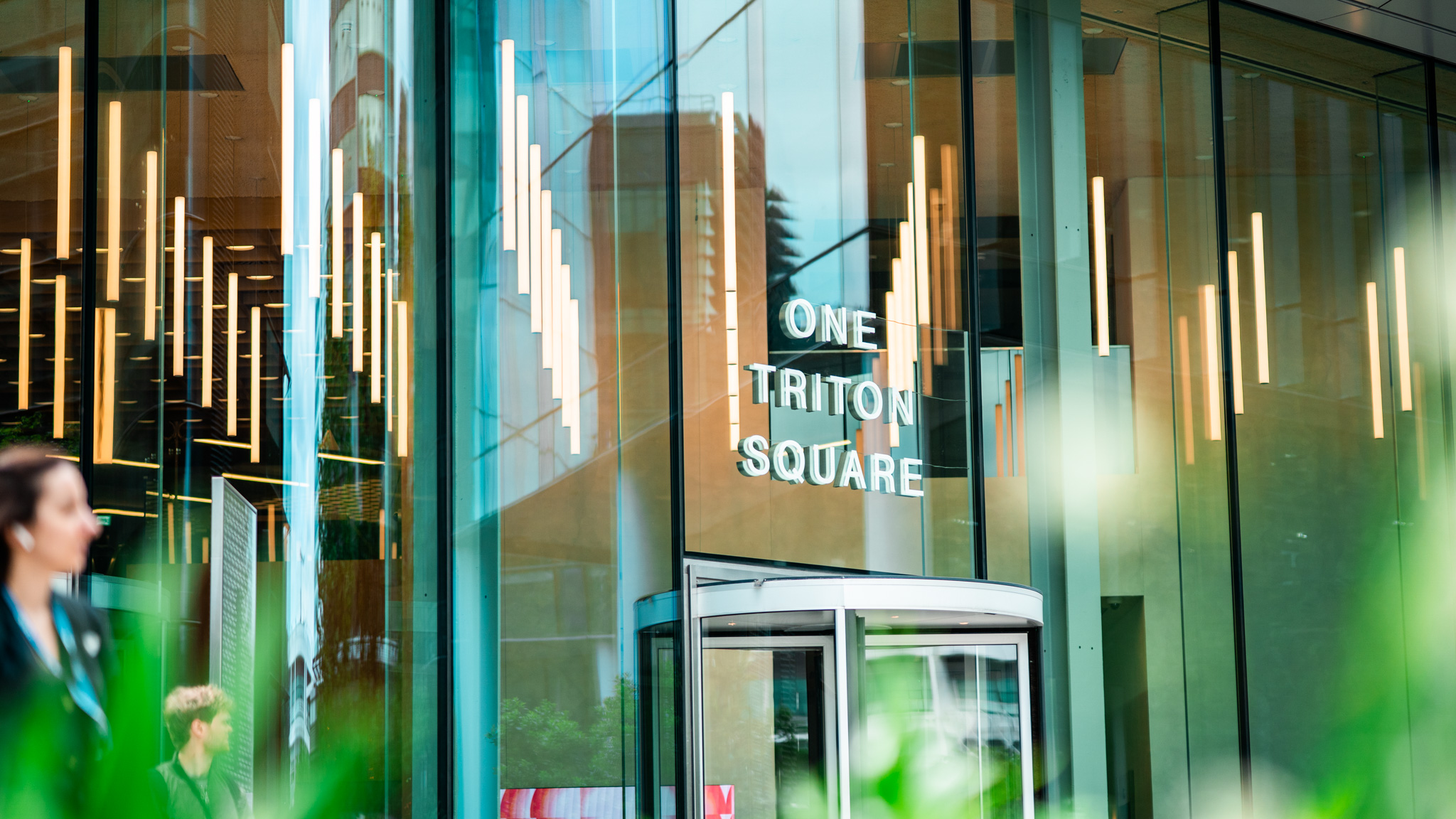
Vorboss, which owns and operates London’s dedicated business fibre network, has connected One Triton Square at Regent’s Place with 100Gbps connectivity, delivering exceptional digital capacity to one of the capital’s most exciting new destinations for science, technology and innovation.

The flagship British Land and Royal London Asset Management building provides more than 300,000 sq ft of purpose-built space, bringing together fitted laboratories, flexible workspace, premium dedicated offices, and shared meeting and event space.
Located in the heart of London’s Knowledge Quarter, One Triton Square is designed to support ambitious businesses at every stage of growth. Flexible floorplates, advanced digital infrastructure and exceptional on-site amenities create an environment where emerging organisations can scale alongside established global leaders. It is workspace built for collaboration and long-term success.

100Gbps is independently available on each floor, providing the capacity occupiers need to support increasingly data-intensive work and emerging technologies. The 100Gbps connection further reinforces One Triton Square’s position as a future-ready commercial destination.
Rhod Morgan, Co-CEO, Vorboss adds:
“Connecting One Triton Square with 100Gbps gives its occupiers the capacity they need not only for the way they work today, but for the technologies and opportunities that come next. It perfectly complements the vision British Land and Royal London Asset Management had for the building – a space designed around the needs of ambitious, innovation-led organisations”
“One Triton Square sits at the centre of London’s science and technology ecosystem, and we’re incredibly proud to be providing the infrastructure it needs to thrive.”
Simon Hepher, Head of Asset Management, Regent’s Place and Innovation Assets, British Land:
“One Triton Square is a landmark new building at the heart of Regent's Place, designed to support ambitious businesses at every stage - from agile start-ups to established global leaders. Alongside best-in-class laboratories, workspace, and offices, the building will now also offer some of the best digital connectivity in London, with 100Gbps providing occupiers the capacity they need for increasingly data-intensive work as they scale and grow.”
Mark Carroll, Property Development Director, Royal London Asset Management:
“As a long-term investor, we are focused on creating places where businesses can thrive. This investment in digital infrastructure further enhances One Triton Square's appeal to science, technology and innovation-led occupiers and supports its long-term success.”
The connection at One Triton Square forms part of Vorboss’ commitment to ensuring London has the serious digital infrastructure required to remain a leading global centre for business, science and technological innovation.
Ends.


The experience driving our growth
David has been central to our success as our Chief Financial Officer. Drawing on his experience at Zayo Group and RBC Capital Markets, he brings strong insight across large-scale infrastructure, investment banking and managed services. As our CFO, he’s been instrumental in shaping a commercial model that supports businesses as they grow, giving our customers the certainty and simplicity they expect.
Rhod has played a pivotal role in operations at Vorboss since 2020. He led the build of our network, now spanning over 900 km, and has raised industry standards across quality and efficiency, making sure our customers have a flawless experience. With previous roles at companies like Arup and WeWork, Rhod understands the complexity of London commercial real estate and knows exactly what it takes to deliver world-class technology in a fast-paced city.
The next chapter
Under David and Rhod’s leadership, we are doubling down on our commitment to keep things simple for our customers and remain the transparent, accountable provider ambitious businesses rely on as they grow.
“Vorboss is on path to becoming one of the UK’s leading B2B connectivity and managed service providers,”
says Adam Dunlop, Operating Partner at Octopus Capital and Chair of the Vorboss Board.
“With David and Rhod’s leadership, and the strength and commitment of the team across the business, I am genuinely excited about what lies ahead.”
Vorboss is part of the Fern Trading Group, managed and advised by Octopus Investments. This partnership, backed by £250million in funding, enabled us to build an independent, 100Gbps London fibre network and connect thousands of businesses across the capital. Having expanded our offering with a range of cybersecurity and managed technology solutions last year, we continue to do things differently by delivering everything end-to-end through our in-house teams.