One Triton Square joins London’s best-connected buildings with Vorboss 100Gbps connectivity through British Land partnership

No-one likes passwords.
Creating them. Remembering them. Typing them in. Your whole mood can change when an application you’re using suddenly logs you out, and you have to go through login all over again.
It’s frustrating for everyone.
So here’s some very welcome news, courtesy of Microsoft, Apple and Google. The tech giants have joined forces to kill off the password for good.
Over the coming year, they plan to roll out no-password logins across all of their platforms, using a standard set by the FIDO (Fast Identification Online) Alliance. This sets the worldwide standards for passwordless authentication.
That’s a bit of a mouthful… so some people call this a passkey. A lot easier to remember.
A passkey works in a similar way to multi-factor authentication (where you use a separate device to prove it’s really you), but with less effort required. It’s very simple. To login to something, you’ll use your phone to prove it’s really you.
Your computer will use Bluetooth to verify you’re sat nearby. Because Bluetooth only works a short distance, this should stop many phishing scams. Then it’ll send a verification message to your phone. You’ll unlock your phone in the usual way, with your face, fingerprint or PIN.
And that’s it. You’re logged in.
Passkeys rely on something called public key cryptography. When you register with an application or website a key pair is made between the website and your phone.
These are really long numbers that are connected in some way. But you’ll never see them and you certainly don’t have to remember them. Your phone verifies the pair when you unlock it in the normal way.
And you don’t have to worry about losing your phone. It’s not enough to just have your device… someone has to be able to unlock it as well.
Your passkeys will be backed up in the cloud, so if you get a new device you can simply transfer over your information. In the same way it’s now easy to set up a new phone to be just like your old device.
These passkeys are not only simpler for you, but should keep your data safer.
There is no password for cyber criminals to steal. And your phone needs to be close to your computer to login. It’s not fool proof, but it’s a lot better than the current situation with passwords and multi-factor authentication.
We’d love to hear your thoughts on this one.
Are you excited to say goodbye to traditional passwords?
Get in touch to let us know.
But we can all agree that having 20 tabs open in your browser at any one time has a negative effect on productivity.
Simply because it takes so much more time to find the web pages and services you need when you’re looking for them.
This might not be a problem for much longer.
If you’re a fan of Microsoft browser Edge, you’ll be interested in a new feature that’s going to debut soon.
Workspaces was originally revealed a year ago, back in April 2021. But since then Microsoft has gone quiet about it. We assumed it was dead in the water.
But a preview build of Edge that’s just come out for developers includes an option to create new Workspaces. So it looks like we could all be seeing the feature rolled out in the months ahead.
Workspaces allows you to group together browser tabs, and open or close groups with a click.
There are a number of ways you might use this. Perhaps to keep work-related and personal information separate. Or even grouping together information relating to different projects.
These groups can be named and colour coded, so it’s easy to find the right information at the right time.
And unless you delete a Workspace, when you close and reopen Edge all your tabs will be there waiting for you.
There’s no release date for this yet. But if you can’t wait to get stuck in, more good news – Google’s Chrome browser already offers a similar feature called tab groups.
A simple right-click lets you group together tabs, label them and colour code them too. You can even reorder them on your tab strip to organise them further.
Need more productivity boosting tools for your business?
We’d love to help, just get in touch.
A new update coming soon to Microsoft Edge will give you access to a new and improved password management feature. This will allow you to store all your passwords within your browser automatically, giving you a cost-effective way to avoid password-based cyber-attacks.
However. Although this new feature is more secure than using the same login details across multiple applications, our advice would be to avoid browser-based password managers in your business.
Why?
Because they’re not flexible enough and don’t give enough control to you the boss – especially when a member of staff leaves.
When you use a dedicated password manager, you can remove someone’s access to all their applications at the push of a button. You can also access their login details if you need to.
You still benefit from secure encryption, but it also works across all devices, including different browsers.
A separate password manager is also a lot more secure, which is really important when you have multiple people using your applications, each with their own login details.
And as a bonus, your password manager will generate strong random passwords for you; remember them; and auto complete the login boxes.
That means you’ll have even better protection from brute force attacks, where cyber criminals try to guess your passwords.
If you don’t already use a password manager in your business, it’s about time you did. It’s an extra layer of data security that you really shouldn’t be without.
There are lots of password managers about.
Would you like to know which one we currently recommend? Get in touch and we’ll tell you.
The partnership will help Optimity provide best in class data protection to its clients by leveraging Redstors cloud-native technology, helping to ensure customer data is protected and accessible on demand.
Redstor brings a wealth of knowledge as one of the leading vendors in the data management space, with over two decades of experience and a customer base spanning multiple public and private sectors.
Leeland Pavey, Optimity’s CEO, said:
“This is a really exciting development in our managed IT services offering designed to offer professional storage and recovery solutions for our customers”
In addition, Rob Buckton, Redstor’s UK Sales Director spoke of the partnership by saying:
“We are delighted to be growing our base of service providers by agreeing this partnership with Optimity. As an experienced service provider, we are confident that Optimity will continue to deliver the highest levels of service to their growing customer base and that Redstor delivers a brilliant new service offering for them to do this.
As our IP grows, we are able to offer an unparalleled level of protection from a single application, something which Optimity clients will be able to benefit from, whether protecting traditional infrastructure, cloud and SaaS applications such as Microsoft 365, Google Workspace and Salesforce or utilising our AI-driven malware detection.”
Smart data management and protection
About Redstor: Redstor offers smart, feature-rich data management and protection for environments offering the broadest coverage of support spanning modern and legacy data infrastructure and an ever-widening array of SaaS platforms, including Microsoft 365, Google Workspace and Xero, with no hardware requirements – through a single app.
Our software ensures backup data is safely isolated from live environments and features AI-driven technology to detect and remove malware from within backup data, providing a powerful additional layer of protection against cyber threats. A machine-learning model utilises shared insights, gained from malicious files found in backup sets, for community resilience against zero-day threats with automatic updates to improve protection every day.
Latest from the press room
London, UK, 13 August 2026:
Vorboss, which owns and operates London’s dedicated business fibre network, has connected One Triton Square at Regent’s Place with 100Gbps connectivity, delivering exceptional digital capacity to one of the capital’s most exciting new destinations for science, technology and innovation.

The flagship British Land and Royal London Asset Management building provides more than 300,000 sq ft of purpose-built space, bringing together fitted laboratories, flexible workspace, premium dedicated offices, and shared meeting and event space.
Located in the heart of London’s Knowledge Quarter, One Triton Square is designed to support ambitious businesses at every stage of growth. Flexible floorplates, advanced digital infrastructure and exceptional on-site amenities create an environment where emerging organisations can scale alongside established global leaders. It is workspace built for collaboration and long-term success.
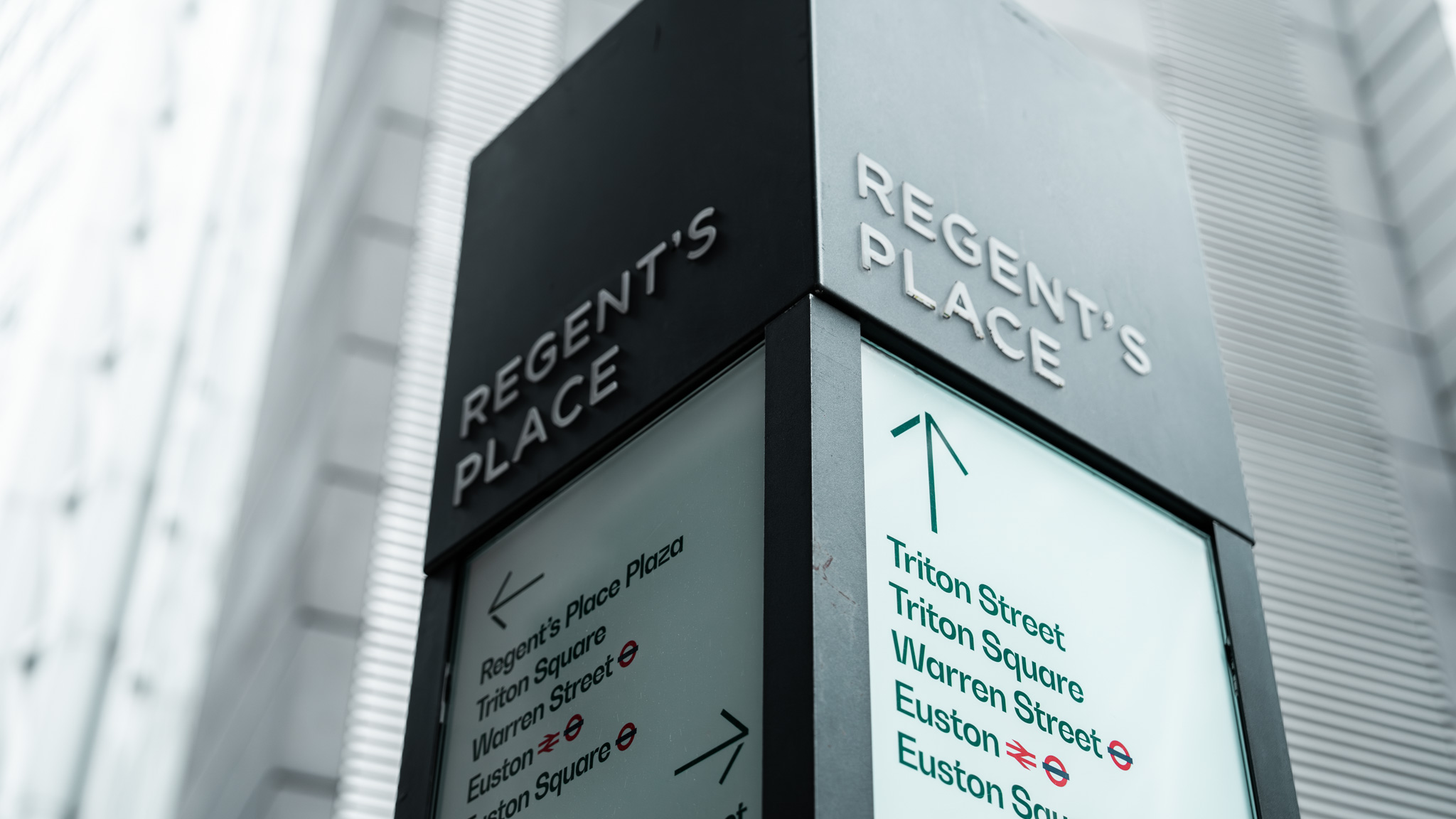
100Gbps is independently available on each floor, providing the capacity occupiers need to support increasingly data-intensive work and emerging technologies. The 100Gbps connection further reinforces One Triton Square’s position as a future-ready commercial destination.
Rhod Morgan, Co-CEO, Vorboss adds:
“Connecting One Triton Square with 100Gbps gives its occupiers the capacity they need not only for the way they work today, but for the technologies and opportunities that come next. It perfectly complements the vision British Land and Royal London Asset Management had for the building – a space designed around the needs of ambitious, innovation-led organisations”
“One Triton Square sits at the centre of London’s science and technology ecosystem, and we’re incredibly proud to be providing the infrastructure it needs to thrive.”
Simon Hepher, Head of Asset Management, Regent’s Place and Innovation Assets, British Land:
“One Triton Square is a landmark new building at the heart of Regent's Place, designed to support ambitious businesses at every stage - from agile start-ups to established global leaders. Alongside best-in-class laboratories, workspace, and offices, the building will now also offer some of the best digital connectivity in London, with 100Gbps providing occupiers the capacity they need for increasingly data-intensive work as they scale and grow.”
Mark Carroll, Property Development Director, Royal London Asset Management:
“As a long-term investor, we are focused on creating places where businesses can thrive. This investment in digital infrastructure further enhances One Triton Square's appeal to science, technology and innovation-led occupiers and supports its long-term success.”
The connection at One Triton Square forms part of Vorboss’ commitment to ensuring London has the serious digital infrastructure required to remain a leading global centre for business, science and technological innovation.
Ends.


The experience driving our growth
David has been central to our success as our Chief Financial Officer. Drawing on his experience at Zayo Group and RBC Capital Markets, he brings strong insight across large-scale infrastructure, investment banking and managed services. As our CFO, he’s been instrumental in shaping a commercial model that supports businesses as they grow, giving our customers the certainty and simplicity they expect.
Rhod has played a pivotal role in operations at Vorboss since 2020. He led the build of our network, now spanning over 900 km, and has raised industry standards across quality and efficiency, making sure our customers have a flawless experience. With previous roles at companies like Arup and WeWork, Rhod understands the complexity of London commercial real estate and knows exactly what it takes to deliver world-class technology in a fast-paced city.
The next chapter
Under David and Rhod’s leadership, we are doubling down on our commitment to keep things simple for our customers and remain the transparent, accountable provider ambitious businesses rely on as they grow.
“Vorboss is on path to becoming one of the UK’s leading B2B connectivity and managed service providers,”
says Adam Dunlop, Operating Partner at Octopus Capital and Chair of the Vorboss Board.
“With David and Rhod’s leadership, and the strength and commitment of the team across the business, I am genuinely excited about what lies ahead.”
Vorboss is part of the Fern Trading Group, managed and advised by Octopus Investments. This partnership, backed by £250million in funding, enabled us to build an independent, 100Gbps London fibre network and connect thousands of businesses across the capital. Having expanded our offering with a range of cybersecurity and managed technology solutions last year, we continue to do things differently by delivering everything end-to-end through our in-house teams.