One Triton Square joins London’s best-connected buildings with Vorboss 100Gbps connectivity through British Land partnership
And while many of the attacks are between these two countries, there is very real potential for other countries to fall victim to cyber-attacks by Russia, thanks to the sanctions placed upon it.
Over in the US, President Joe Biden declared the government had been improving national cyber security defences for some time now.
They’re focusing on the infrastructure to make sure that water, electricity and oil pipeline services aren’t at increased risk of attack.
Some very sensible cyber security advice has also been issued. There are a series of actions that businesses should be taking immediately to protect themselves against cyber-attacks, and other data security risks.
- To start with look at implementing multi-factor authentication. This is where you generate a login code on another device, to prove it’s really you logging in.
- Data backups should also be checked on a regular basis. Ideally there should be a copy of data that cannot be changed during a cyber-attack.
- All data should also be encrypted, meaning it would have no value and be unusable if anyone did manage to access it.
It’s also a good idea to have an emergency plan ready to go that will help mitigate any attack quickly and effectively.
Businesses are also being advised to give their staff training to help them spot and avoid the common tactics used by cyber criminals.
These include;
- Phishing attacks where they send an email pretending to be someone else
- Spoof login web pages, where they hope you will enter real login details in error.
If you have an IT support partner already, speak with them to make sure all of your systems are fully up-to-date and patched as necessary.
They can also help you to audit how well you’re performing with the items above, and get a plan in place to help you respond to an attack or attempted attack.
If you don’t have an IT support partner – or you feel your current one isn’t able to help you with your data security, we can help.
Call us today to find out more!
Your IT isn’t just about computers and data. It’s everything from your phone system, to your printers, to where you access your documents.
And that’s without going into the measures you must take to keep your data and infrastructure safe and secure from cyber criminals.
So we weren’t surprised by a new forecast from IT research and consultancy firm, Gartner, which predicts businesses will spend more on technology this year.
In fact, the global IT spend could reach an enormous £3.3 trillion. That’s despite
- Rising inflation
- Russian invasion
- Shortages of chips
- Shortage of IT talent.
We believe there’s been a fundamental shift in the way businesses view their technology.
Two years ago at the beginning of the pandemic, companies were forced to take unexpected urgent action to help employees work from home. In many cases that meant a large investment in devices, rapid changes to systems, and the adoption of new technology.
And it’s worked out well for most. Businesses have adapted quickly and many have embraced the changes on a more permanent basis.
But it’s also made business leaders realise they need to be better prepared to respond to future potential disruption.
This is the difference between a flexible and agile business… and one that stumbles at the first hurdle.
Many businesses no longer see IT as a cost. They embrace it as an investment. They can see the direct correlation between creating robust, safe and flexible systems – and their teams’ abilities to achieve more.
Owners and managers are also placing more value on excellent, proactive technology support from a trusted partner.
To not only plan and execute big development projects. But also to help reduce downtime and ensure systems are secure and running as they should be.
If you’re reviewing your spend on technology and support, we can help. Get in touch.
If you would like to find out more about our services and how we can help you, get in touch and we can arrange a no obligation free consultation.
Working from home has been life-changing for some. Your people are able to be more flexible with their time during the day, fitting in time for school pick-ups and appointments where perhaps they couldn’t before.
And in return, it means that more work is being done in the evenings.
Microsoft recently did an internal survey on how working from home affects collaboration. It’s so they can make more improvements to Teams.
It found that there are two main spikes in productivity in a typical day:
- One before lunch
- One after lunch.
For a third of its workers, there was a third productivity spike, at around 10pm. That’s people replying to emails before bed.
Where employees have removed commuting time, their working time and availability has increased.
Within Microsoft, employees actually increased their working time by 46 minutes – or 13% each day – with a huge 28% increase in after-hours work.
And although it sounds like it could be good for business, it demonstrates just how blurred the lines between work and home life have become, post-pandemic.
Because this third peak of activity actually has the potential to cause a LOSS of productivity. Employees are feeling more pressured to respond to emails quickly, which increases their stress levels in the evenings, affecting morale and overall well-being.
Microsoft CEO Satya Nadella said businesses need to place more emphasis on soft skills and good management practices so that employee well-being is taken care of properly.
He advises that business owners and managers set very clear expectations on after-hours work, so that employees don’t feel any undue pressure to always be available. One of these expectations should involve not feeling the need to respond to emails at the weekend, even if it’s from a manager.
Are you setting the right expectations for your people, and providing them with the tools they need to increase productivity without increasing their working hours?
Here’s a quick win you can personally drive. Instead of sending emails at night, schedule them to be sent the following morning.
When your team see the boss doing this, it could quickly become the accepted culture of the whole business. Give it a try.
The use of Microsoft Teams has just exploded in the last few years, and it now boasts 270 million people using it every month.
Of course, it was the right tool at the right time when we all rushed to working from home at the start of the pandemic. But the growth of Teams has continued, even if some believe the growth has slowed down a little recently.
Teams is so important to some businesses, that the owners and managers wonder how they ever managed without it. Teams gives us the ability to stay connected wherever we’re working, and to collaborate on projects with no fuss.
Because it’s part of the Microsoft 365 package, it’s the logical solution to keep a team working together in the hybrid work age.
One of the things that makes Teams so special is Microsoft’s commitment to constantly making improvements and adding features. They’re not just making the core features better. They’re helping all of us be more productive and less distracted.
Over the past few months we’ve seen new features such as a virtual whiteboard you can use to throw around ideas in a video meeting.
Also, new and improved chat features, such as pinning chats to the top. You can also filter messages more easily. And change your view to allow you to focus just on the task you’re working on.
There are always more new features in development to make the experience even better.
There are three new features being released soon that we’re excited about.
- This feature feels like it should have been there from day one. When you rename a Teams channel, it will automatically change the name of corresponding SharePoint folder. Due later this month.
- New Chat With Self feature will be released. This will allow you to send yourself notes, messages, files and images. How have we lived without this feature for so long?! We think this could be a real game changer. Due in June.
- Upgrades to teams calls you make from your browser, rather than the Teams app making it. The new releases in June improve the experience with the same features as the app.
Of course, there are many other updates being released throughout the rest of the year. With Teams, there’s always an exciting new update on the way.
If you need any help setting up Teams so it’s customised to your business, get in touch.
Early on in the first lockdowns in 2020, did you ever sit at your computer and think “I really like working from home”?
Or were you the opposite; desperate to get back into a building and meet with other people like in the old days?
Whichever was the case – and whether you feel the same now – we’ve ended up with a mix of the two: Hybrid working. Some people are in the office. Some are at home. The days of having everyone together at the same time are gone. Maybe forever.
Which means that video calls are here to stay.
If you want to invest in your video call setup, here are three easy upgrades for you.
- The first is about improving your picture quality. Many people use the built-in camera on their laptop, which is OK. Cheap webcams also do the job. However, if you’re spending a lot of your day on video calls, you can instantly make yourself look better with a decent camera. The simplest option is to use an old smartphone. The cameras in most modern phones are great. And it’s really easy to link them up to your computer using a free app, like Iruin. Alternatively you could invest in a 4K webcam for the ultimate professional look, but this can be pricey. Most people find that a 1080p Full HD resolution webcam is more than enough.
- The second and the most important part of your video call - and the one most often neglected - the sound. Think about how well you can hear the other people on your calls, and how well they can hear you. Most video platforms allow you to do a test call to check your quality. If your computer’s built-in microphone isn’t up to the job, get a USB desk microphone. The other alternative is to buy a headset with a mic. If you work in a noisy environment, not only will people you call be able to hear you more clearly, but you’ll hear them better too.
- Finally, think about your lighting. Even the best camera will struggle to make you look great with poor lighting. The very best solution is to use natural light. That means sitting facing a window while you are on calls. When that’s not practical you can give your lighting a boost with a ring light. This will give you even lighting all over your face. Again, this doesn’t have to be an expensive option. You can get great ring lights without spending a fortune. If you wanted full control over your lighting, consider two LED lights. These can be adjusted to light the whole scene. And with some, you can adjust the colour temperature of the lights to match the natural daylight coming through your window. That will give you a consistent look on each call, day and night.
Finally, here’s a thought. If you don’t want to have lots of accessories cluttering your desk, consider a webcam with built-in microphone AND ring light. What you lose in control you gain in convenience.
The best part about all of these solutions is you don’t have to be an expert to set them up.
You can get them all working with minimal technical knowledge and make your next video call look more professional.
Need specific recommendations on which accessories to buy? Get in touch.
Latest from the press room
London, UK, 13 August 2026:
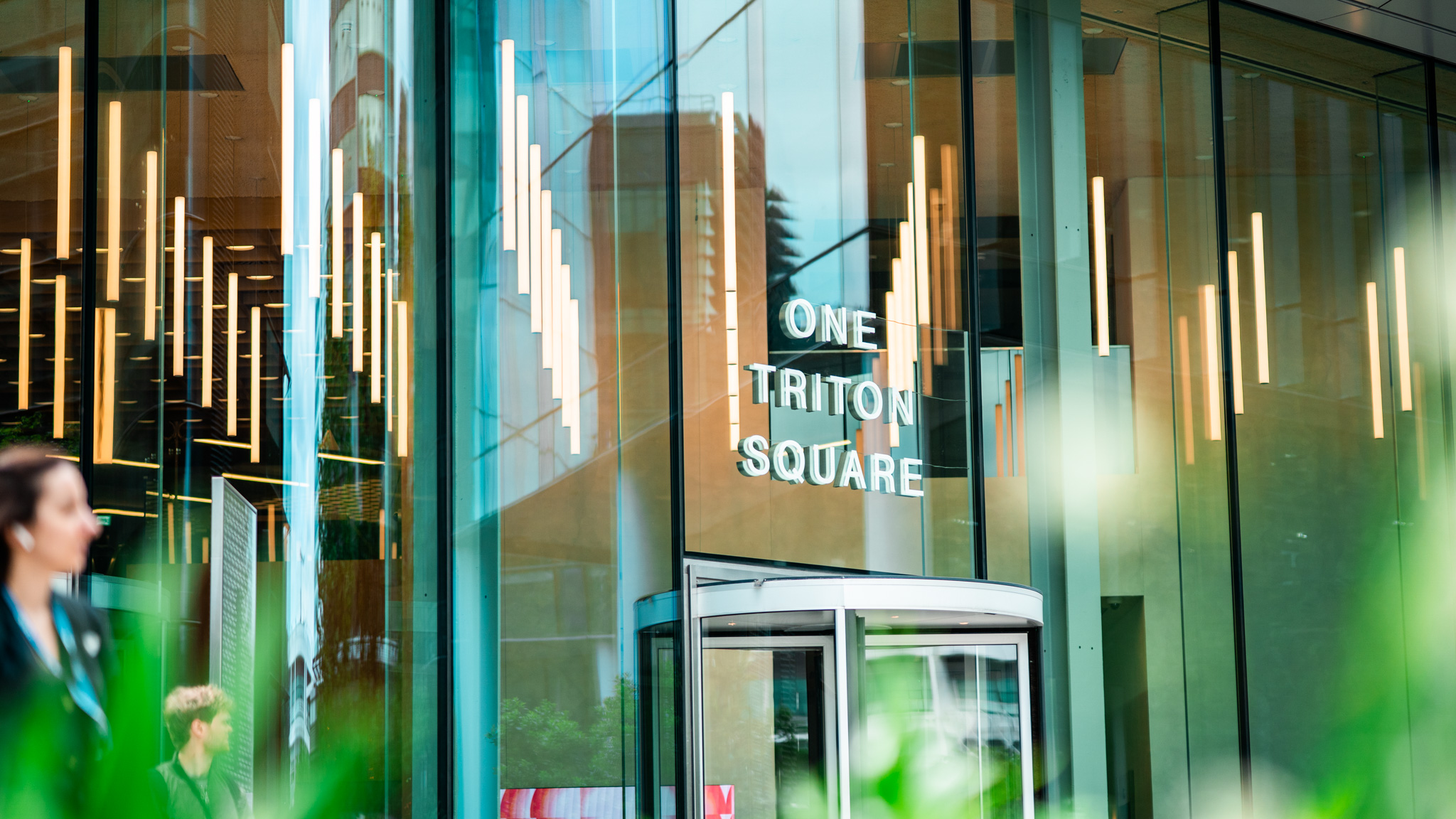
Vorboss, which owns and operates London’s dedicated business fibre network, has connected One Triton Square at Regent’s Place with 100Gbps connectivity, delivering exceptional digital capacity to one of the capital’s most exciting new destinations for science, technology and innovation.

The flagship British Land and Royal London Asset Management building provides more than 300,000 sq ft of purpose-built space, bringing together fitted laboratories, flexible workspace, premium dedicated offices, and shared meeting and event space.
Located in the heart of London’s Knowledge Quarter, One Triton Square is designed to support ambitious businesses at every stage of growth. Flexible floorplates, advanced digital infrastructure and exceptional on-site amenities create an environment where emerging organisations can scale alongside established global leaders. It is workspace built for collaboration and long-term success.

100Gbps is independently available on each floor, providing the capacity occupiers need to support increasingly data-intensive work and emerging technologies. The 100Gbps connection further reinforces One Triton Square’s position as a future-ready commercial destination.
Rhod Morgan, Co-CEO, Vorboss adds:
“Connecting One Triton Square with 100Gbps gives its occupiers the capacity they need not only for the way they work today, but for the technologies and opportunities that come next. It perfectly complements the vision British Land and Royal London Asset Management had for the building – a space designed around the needs of ambitious, innovation-led organisations”
“One Triton Square sits at the centre of London’s science and technology ecosystem, and we’re incredibly proud to be providing the infrastructure it needs to thrive.”
Simon Hepher, Head of Asset Management, Regent’s Place and Innovation Assets, British Land:
“One Triton Square is a landmark new building at the heart of Regent's Place, designed to support ambitious businesses at every stage - from agile start-ups to established global leaders. Alongside best-in-class laboratories, workspace, and offices, the building will now also offer some of the best digital connectivity in London, with 100Gbps providing occupiers the capacity they need for increasingly data-intensive work as they scale and grow.”
Mark Carroll, Property Development Director, Royal London Asset Management:
“As a long-term investor, we are focused on creating places where businesses can thrive. This investment in digital infrastructure further enhances One Triton Square's appeal to science, technology and innovation-led occupiers and supports its long-term success.”
The connection at One Triton Square forms part of Vorboss’ commitment to ensuring London has the serious digital infrastructure required to remain a leading global centre for business, science and technological innovation.
Ends.

The experience driving our growth
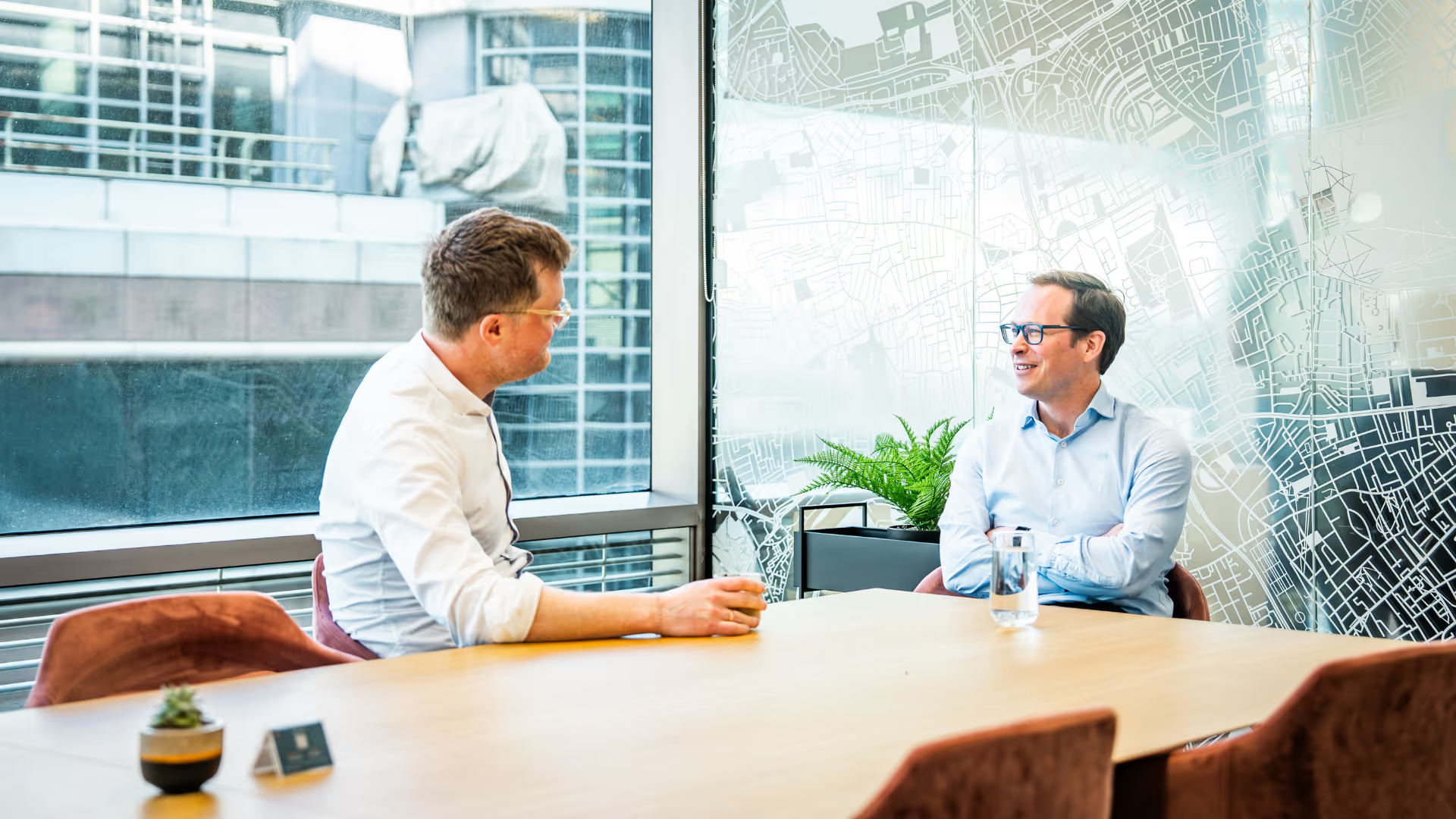
David has been central to our success as our Chief Financial Officer. Drawing on his experience at Zayo Group and RBC Capital Markets, he brings strong insight across large-scale infrastructure, investment banking and managed services. As our CFO, he’s been instrumental in shaping a commercial model that supports businesses as they grow, giving our customers the certainty and simplicity they expect.
Rhod has played a pivotal role in operations at Vorboss since 2020. He led the build of our network, now spanning over 900 km, and has raised industry standards across quality and efficiency, making sure our customers have a flawless experience. With previous roles at companies like Arup and WeWork, Rhod understands the complexity of London commercial real estate and knows exactly what it takes to deliver world-class technology in a fast-paced city.
The next chapter
Under David and Rhod’s leadership, we are doubling down on our commitment to keep things simple for our customers and remain the transparent, accountable provider ambitious businesses rely on as they grow.
“Vorboss is on path to becoming one of the UK’s leading B2B connectivity and managed service providers,”
says Adam Dunlop, Operating Partner at Octopus Capital and Chair of the Vorboss Board.
“With David and Rhod’s leadership, and the strength and commitment of the team across the business, I am genuinely excited about what lies ahead.”
Vorboss is part of the Fern Trading Group, managed and advised by Octopus Investments. This partnership, backed by £250million in funding, enabled us to build an independent, 100Gbps London fibre network and connect thousands of businesses across the capital. Having expanded our offering with a range of cybersecurity and managed technology solutions last year, we continue to do things differently by delivering everything end-to-end through our in-house teams.