One Triton joins London's best connected buildings with Vorboss 100Gbps



The experience driving our growth
David has been central to our success as our Chief Financial Officer. Drawing on his experience at Zayo Group and RBC Capital Markets, he brings strong insight across large-scale infrastructure, investment banking and managed services. As our CFO, he’s been instrumental in shaping a commercial model that supports businesses as they grow, giving our customers the certainty and simplicity they expect.
Rhod has played a pivotal role in operations at Vorboss since 2020. He led the build of our network, now spanning over 900 km, and has raised industry standards across quality and efficiency, making sure our customers have a flawless experience. With previous roles at companies like Arup and WeWork, Rhod understands the complexity of London commercial real estate and knows exactly what it takes to deliver world-class technology in a fast-paced city.
The next chapter
Under David and Rhod’s leadership, we are doubling down on our commitment to keep things simple for our customers and remain the transparent, accountable provider ambitious businesses rely on as they grow.
“Vorboss is on path to becoming one of the UK’s leading B2B connectivity and managed service providers,”
says Adam Dunlop, Operating Partner at Octopus Capital and Chair of the Vorboss Board.
“With David and Rhod’s leadership, and the strength and commitment of the team across the business, I am genuinely excited about what lies ahead.”
Vorboss is part of the Fern Trading Group, managed and advised by Octopus Investments. This partnership, backed by £250million in funding, enabled us to build an independent, 100Gbps London fibre network and connect thousands of businesses across the capital. Having expanded our offering with a range of cybersecurity and managed technology solutions last year, we continue to do things differently by delivering everything end-to-end through our in-house teams.

As we grow, we stay focused on building an inclusive workplace where everyone has access to opportunity, progression and support, regardless of gender.
Our 2026 Gender Pay Gap Report shares the progress we have made, where we still need to improve, and the actions we are taking to reach gender parity by 2028.


When Flight Centre, the unforgettable-experience-plotting travel experts, were preparing to open a brand-new shopfront on Upper Street in central London, everything was going to plan. The team had lined up suppliers early, including their internet provider, expecting smooth sailing to launch day.
Unfortunately, their installation was delayed, and the team kept chasing answers. Eventually, they learned the duct was collapsed and their chosen provider couldn’t fix it in time.
Grounded? Not for long
With just two weeks to go, Flight Centre had to act fast. They turned to Vorboss. In just over a week, the new shopfront was live and connected through Vorboss’s Rapid Install service.
Thanks to Flight Centre’s leadership and coordination across their teams in Europe and Australia, everything came together, and the store opened right on time.

“The collapsed duct was an unexpected challenge after months of delays with our previous provider. Vorboss stepped in quickly, took control, and kept things on track, ensuring the installation stayed on schedule despite the setback.”
-Tim Head, Global Service Delivery Head, Flight Centre

So good, they brought us to Barcelona
The experience made such an impact that Flight Centre brought Vorboss into another project, this time in Barcelona. Using a local partner, they added another circuit for their new office. The line tails into the Vorboss infrastructure in Barcelona and links all the way back to the London network.
“Vorboss’s impressive internet service and customer experience gave us the confidence to bring them into further projects. Having a consistent connectivity partner across locations simplifies management and supports our growth.”
-Tim Head, Global Service Delivery Head, Flight Centre

“OK. So… exactly what is a DDoS attack?” Unfortunately, it’s a question being asked with increasing regularity by owners and CEOs confronted with the news that their systems have suffered an attack.
DDoS (Distributed Denial-of-Service) attacks pose a constant and escalating threat to all businesses. According to cyber security training platform StationX, between 2020 and 2022 cyber attacks against SMEs surged by 150%, reaching 31,000 attacks per day globally. A 2025 roundup of cyber crime statistics from one of the UK’s leading managed services firms, meanwhile, revealed that enterprise organisations undergo an eyewatering 1700 attacks each day. Regardless of size, it’s important for all businesses to understand how DDoS attacks work, what their impact might be and, most importantly, how to prevent DDoS attacks.
We’ve put together this guide to help you understand the fundamentals of DDoS attacks, the types businesses face, why they are targeted, and the best strategies for prevention and mitigation. And we’ll also look at how Vorboss can help you safeguard your operations and prevent DDoS attacks from succeeding.
What is a DDoS attack?
A DDoS attack aims to overwhelm a system, service, or network with excessive internet traffic, leaving it inaccessible to legitimate users. In business terms, the consequences can be extremely serious, leading to financial loss, reputational damage and substantial disruption to operations.
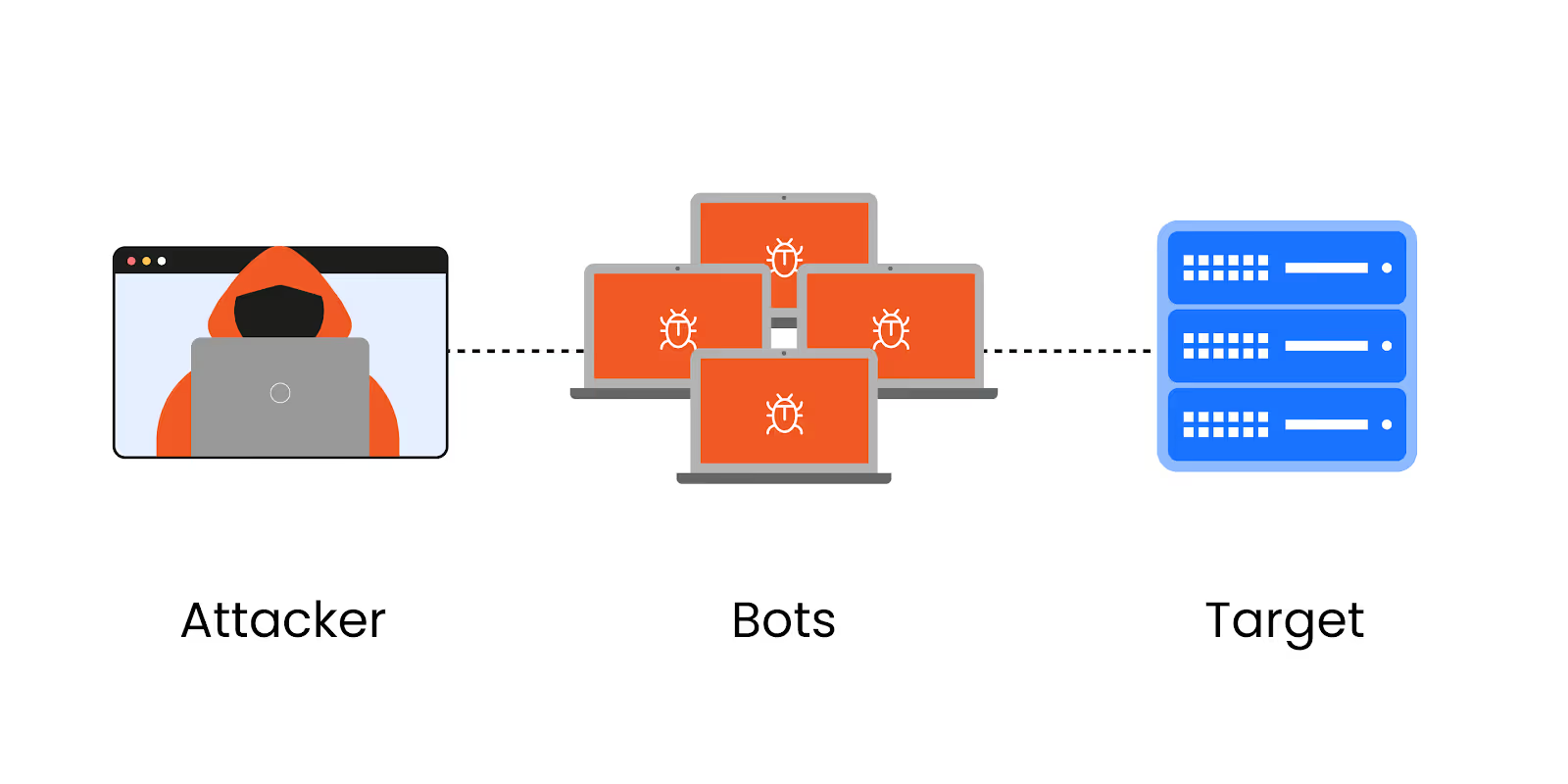
So what’s the difference between a DoS and DDoS attack, as both terms are often mentioned when a business has been affected? In a traditional DoS (Denial-of-Service) attack, a single system is usually involved in launching the attack. A DDoS attack, in contrast, leverages multiple compromised computers, often distributed globally, to create a coordinated assault. These devices form what is known as a botnet - an army of infected machines controlled by a malicious actor whose agenda may range from the criminal to the pointlessly disruptive.
Now let’s try to answer the question, “What are DDoS attacks?” at a technical level. Typically, DDoS attacks work by exploiting weaknesses in internet-connected systems, using a range of techniques to flood the target with requests.
Attackers may direct massive amounts of data at a server to exhaust its bandwidth, send malformed network packets to confuse and crash the system, or target vulnerabilities in applications to bring them down. Because the traffic appears to come from many different sources, blocking the attack is much more complex than dealing with a single-source DoS attack.
There are also some common misconceptions about what DDoS attacks are. One of these is that only large companies are really at risk. In reality, businesses of all sizes are targeted all the time, including small and medium enterprises.
Another misconception is that firewalls alone provide adequate protection. While firewalls play an important role in network security, they are not designed to handle the sheer scale of a DDoS attack. People also often assume that a DDoS attack would be immediately noticeable. Many attacks begin subtly, however, gradually increasing in intensity over time. This makes early detection and mitigation a critical part of how to prevent DDoS attacks.
Types of DDoS attacks
DDoS attacks come in several forms, each with its own approach to overwhelming a system. With IBM’s 2024 Cost of a Data Breach Report revealing that the global average cost of a data breach (across both enterprise and SMB targets) had reached $4.88 million, it’s worth being aware of the different attack types, so you can take targeted action to defend against them.
Volumetric Attacks
Volumetric attacks are among the most common and straightforward forms of DDoS attacks. They work by consuming all the available bandwidth between the target system and the rest of the internet, so that the system has no capacity to handle legitimate users or customers.

Because of their scale, these attacks can be devastating, with the total amount of data being directed at the target system sometimes reaching trillions of bits per second in intensity - far beyond what most networks are designed to handle. The way that attackers achieve this is by generating a massive flood of data requests, often using the botnets described earlier to amplify their impact. Examples of volumetric type attacks include UDP floods, ICMP floods, and DNS amplification attacks.
To combat volumetric attacks, businesses need robust traffic filtering solutions, content delivery networks (CDNs), and scalable network infrastructure that’s capable of absorbing these kinds of sudden surge in demand.
Protocol Attacks
Protocol attacks, which are also known as state-exhaustion attacks, exploit vulnerabilities in network protocols to use up server resources. Unlike volumetric attacks that overwhelm bandwidth, protocol attacks specifically target weaknesses in the way devices and applications handle network connections. SYN floods, Ping of Death and Smurf attacks are all examples of this type of attack.

Protocol attacks can be difficult to detect because they don’t rely on massive traffic spikes. Instead, they stealthily take advantage of standard networking functions, causing a system to become sluggish or unresponsive. A business can mitigate these attacks using firewall rules, rate-limiting strategies and dedicated intrusion detection systems that monitor network activity for unusual patterns.
Application Layer Attacks
Application layer attacks, which are also known as Layer 7 attacks, are the most sophisticated and difficult kind of DDoS to detect. These attacks target the application or service layer of a system, mimicking legitimate requests but at a scale designed to overwhelm backend processes. Because they don’t generate massive volumes of traffic like volumetric attacks, they often outwit traditional detection methods.

One well-known example is the HTTP flood, where attackers send an overwhelming number of HTTP requests to a website, forcing the server to process each request until it becomes overloaded. Another Application Layer DDoS attack example is the Slowloris attack, where an attacker opens multiple connections to a target server and sends partial HTTP requests, keeping them open for as long as possible to consume server resources.
Application layer attacks are particularly dangerous because they target specific functions of a business’s digital services. A well-crafted attack can take down your login pages, API endpoints, or online transaction systems, disrupting essential operations in your business.
“How do I stop DDoS attacks of this kind?” Good question. Mitigation strategies include using web application firewalls (WAFs), traffic analysis tools and bot mitigation services to distinguish between human users and automated threats.
To develop an effective defence strategy, as at Vorboss we routinely do for customers, a business and its security partner need to understand the different types of DDoS attacks. By combining multiple layers of security - such as firewalls, traffic monitoring, and scalable infrastructure - you can significantly reduce your risk of falling victim to these disruptive cyber threats.
Why are businesses targeted by DDoS attacks?

What is the purpose of a DDoS attack? DDoS attacks happen for a variety of reasons, and you can find your business targeted no matter what industry it is in. Some attacks are financially motivated, while others are designed to cause disruption or make a statement.
Cybercriminals sometimes use DDoS attacks as a form of extortion. In what’s known as a ransom DDoS (RDoS) attack, the attacker demands payment in exchange for stopping or preventing the attack. Businesses that rely on uptime to generate revenue, such as e-commerce platforms or online services, may make the decision to comply rather than risk prolonged downtime.
As is always the case with blackmail, however, paying the ransom does not guarantee protection, and it can even mark the company out as a fruitful ‘repeat’ target for the future.
In some industries, businesses face attacks from competitors looking to cause disruption. A well-timed DDoS attack can take down a rival’s website or online services during a crucial period, such as a product launch or seasonal sales event. While this kind of corporate sabotage is both unethical and, in the UK under Section 3 of the Computer Misuse Act 1990, illegal, it’s certainly not unheard of - particularly in high-competition markets.
DDoS attacks are also used by what are known as ‘Hacktivist’ groups to target organisations they disagree with politically, socially, or ethically. These attacks are often launched against government departments, financial institutions, or businesses associated with controversial industries. Unlike financially motivated attacks, ideological attacks are typically intended to send a message rather than extract ransom.
To complicate things further, not all DDoS attacks have any clear purpose. ‘Random Opportunity Attacks’ are usually carried out simply because an attacker finds an easy target. Automated scripts and botnets constantly scan the internet for vulnerable systems, and if a business lacks proper security measures it can find itself victim of an attack for no real reason whatsoever. While such attacks may not have a specific goal, they can still cause serious damage to your business by disrupting operations, costing both time and money.
Impact of DDoS attacks on businesses

The consequences of a DDoS attack can be devastating. They can affect not only the immediate operational capacity of your business, but also its long-term stability and reputation.
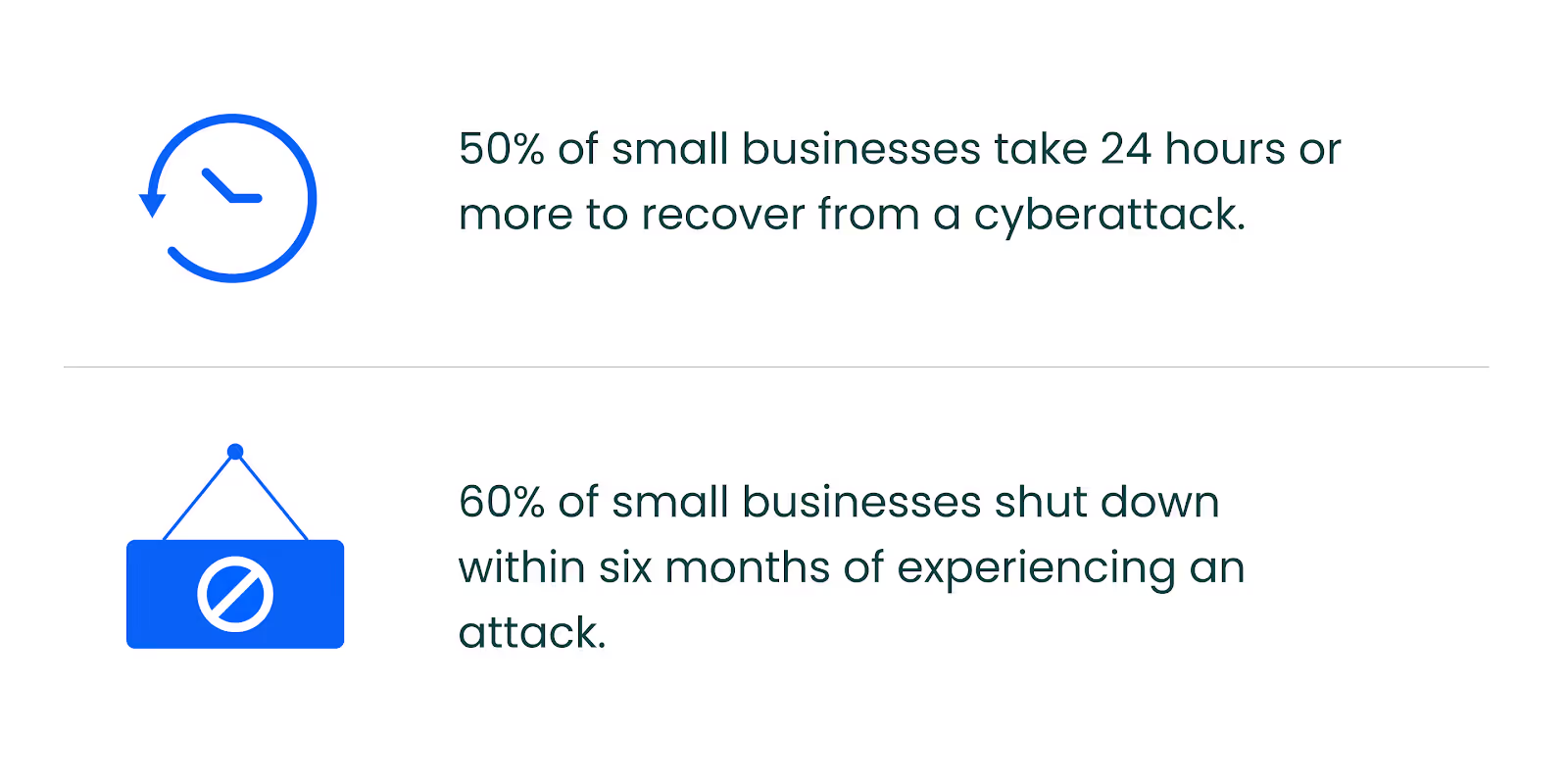
Stats from dasher.com
Downtime and resultant loss of revenue are of primary concern if your business relies heavily on its online presence. If, for example, you run an e-commerce platform or are a financial institution or cloud service provider, disruptions can quickly translate into significant financial losses. Customers unable to access your services may seek alternatives, leading to lost sales and, potentially, long-term customer attrition.
DDoS attacks can also cause damage to your brand reputation. If you repeatedly experience outages your business can quickly gain a reputation for unreliability. In highly competitive markets, this can damage customer confidence and result in reduced market share, as clients and partners begin to view you as insecure or unstable.
Another significant possible impact is the breach of customer trust. Even if no data is stolen, customers expect services to be available when needed. Prolonged disruptions can create doubt in your company’s ability to protect its infrastructure and maintain security, making it harder both to retain existing customers and attract new ones.
Finally, the costs of recovery after a DDoS attack can be extensive. You may find yourselves needing to invest in forensic analysis, security upgrades, and potentially even legal compliance measures if an attack exposes weaknesses that lead to regulatory scrutiny. On top of this, there could be costs associated with customer compensation, public relations efforts and enhanced security infrastructure to prevent future attacks.
How to detect a DDoS attack?
Detecting a DDoS attack early is crucial if you are to minimise its impact. The first sign of an attack is often a sudden slowdown in the performance of your systems or an unexplained spike in traffic. You should be alert to signs such as your website taking longer than expected to load, your services becoming intermittently unavailable, or customers complaining about accessibility issues.
Using monitoring tools and techniques can help distinguish between normal fluctuations in traffic and a potential DDoS attack. Network monitoring solutions can analyse incoming traffic for unusual patterns, such as an unexpected influx of requests from unfamiliar regions or spikes in traffic targeting a specific part of a service. Some businesses implement ‘anomaly detection’ systems that use artificial intelligence to differentiate between legitimate and malicious traffic automatically.

One of the key challenges is distinguishing legitimate traffic surges from DDoS attacks. Seasonal sales, marketing campaigns or viral content can generate large amounts of desirable traffic that may look similar to an attack at first glance. However, legitimate traffic typically shows a natural pattern, while a DDoS attack often appears as a sustained and unnatural surge. Analysing traffic sources, request types, and behavioural patterns can help a business determine whether it’s under attack, or simply experiencing a welcome spike in customer activity.

How to protect your business from DDoS attacks
Vorboss has huge experience in providing businesses of every size with robust protection. So, having looked at what is a DDoS attack, and at how to detect when your business is being targeted, the most important questions are how to prevent DDoS attacks and mitigate their impact?
- The first line of defence is always a robust firewall, filtering incoming traffic to block malicious requests before they reach the network.
- Load balancing and content delivery networks (CDNs) help distribute traffic across multiple servers, preventing single points of failure. This approach enhances resilience against high-volume attacks.
- Conducting regular security audits ensures that vulnerabilities are identified and addressed before they can be exploited.
- It’s also good to develop and maintain an incident response plan, outlining the steps to be taken in the event that you are subject to an attack.
- Working with a trusted internet service provider like Vorboss can enhance protection, as many providers (Vorboss included) offer built-in DDoS mitigation services.
- If your ISP does not offer this, you can safeguard yourselves by using dedicated DDoS mitigation services, which provide real-time traffic analysis and automatic threat neutralisation.
- Finally, you should consider the benefits of automatic mitigation over manual mitigation. Automated systems use AI-driven detection and response, providing faster and more effective defence against attacks, whereas manual mitigation requires human intervention and can be slower to react
How Vorboss in safeguarding against DDoS attacks
When procuring business internet, London companies have a wide range of providers to choose from, but Vorboss provides robust security solutions designed to protect business customers from the growing threat of DDoS attacks. We leverage advanced threat detection and mitigation technologies to make sure customers maintain network uptime and security even in the face of large-scale attacks.
We employ real-time traffic monitoring and intelligent filtering to identify and block malicious traffic before it reaches our customers’ networks. Our automated DDoS mitigation systems detect unusual patterns and respond instantly, reducing downtime and preventing prolonged disruptions. Unlike traditional reactive approaches, Vorboss’s security solutions actively learn from each attempted attack, enhancing protection over time.
Choosing Vorboss as your cybersecurity partner is a smart answer to the question of, “How do I stop DDoS attacks?”
Vorboss provides your business with enterprise-grade DDoS protection backed by a team of experienced cybersecurity experts. Our services include scalable mitigation solutions, ensuring you receive tailored protection no matter what the size of your business or infrastructure. As we integrate our DDoS protection with Vorboss’s high-performance internet services, this results in a seamless solution for any business that’s reliant on fast and uninterrupted connectivity.
By partnering with Vorboss, you gain peace of mind, knowing that your critical online infrastructure is protected from DDoS attacks, no matter what form they take.
Be Proactive. The answer to how to prevent a DDoS attack
DDoS attacks are a pressing issue, and a clear and present danger, for businesses of all sizes. Proactive measures such as implementing robust security solutions, conducting regular audits, and partnering with a reliable provider like Vorboss are the best way to minimise the risk and mitigate the impact of these threats. An effective defence strategy is not so much about recovering from an attack as about preventing it in the first place, protecting both your operations and reputation.
If your business is looking for comprehensive DDoS protection and uninterrupted network performance, get in touch with us.
Chat to our pros to learn how we can help protect your business from DDoS attacks with reliable and secure solutions, or read more on our DDoS protection.


A fast-growing footprint and a move to a new London HQ, InPost is going through exciting changes.
If you’ve ever picked up a parcel from a locker at your local supermarket or petrol station, chances are you’ve used InPost. Founded in Poland and now operating across nine countries, they’re a leader in logistics solutions for the e-commerce industry in Europe.
Preparing for the move
The team knew that moving offices and switching internet providers can bring unexpected hurdles, so finding a partner who could provide dependable service and simplify the installation process was essential.
A smoother install
With its fully owned network and fast installation times Vorboss offered exactly that. No third parties, quick turnaround, and dedicated support throughout.
“The installation process was smooth, and we were really impressed with the ongoing support, including helping us move our connection free of charge as we expand.” – says Zafar Shah, IT UX Manager.

Up and running from day one
In February 2024, InPost’s new HQ went live with uninterrupted service from day one, just as it should be. As their success continues, their offices recently expanded across more floors. Vorboss made the expansion seamless, transferring their connection at no extra cost and keeping their network running smoothly throughout.
“We've had flawless performance since going live. The flexibility to upgrade quickly and having our own dedicated lines (not relying on legacy service providers), were big selling points for us.” - Zafar Shah, IT UX Manager.
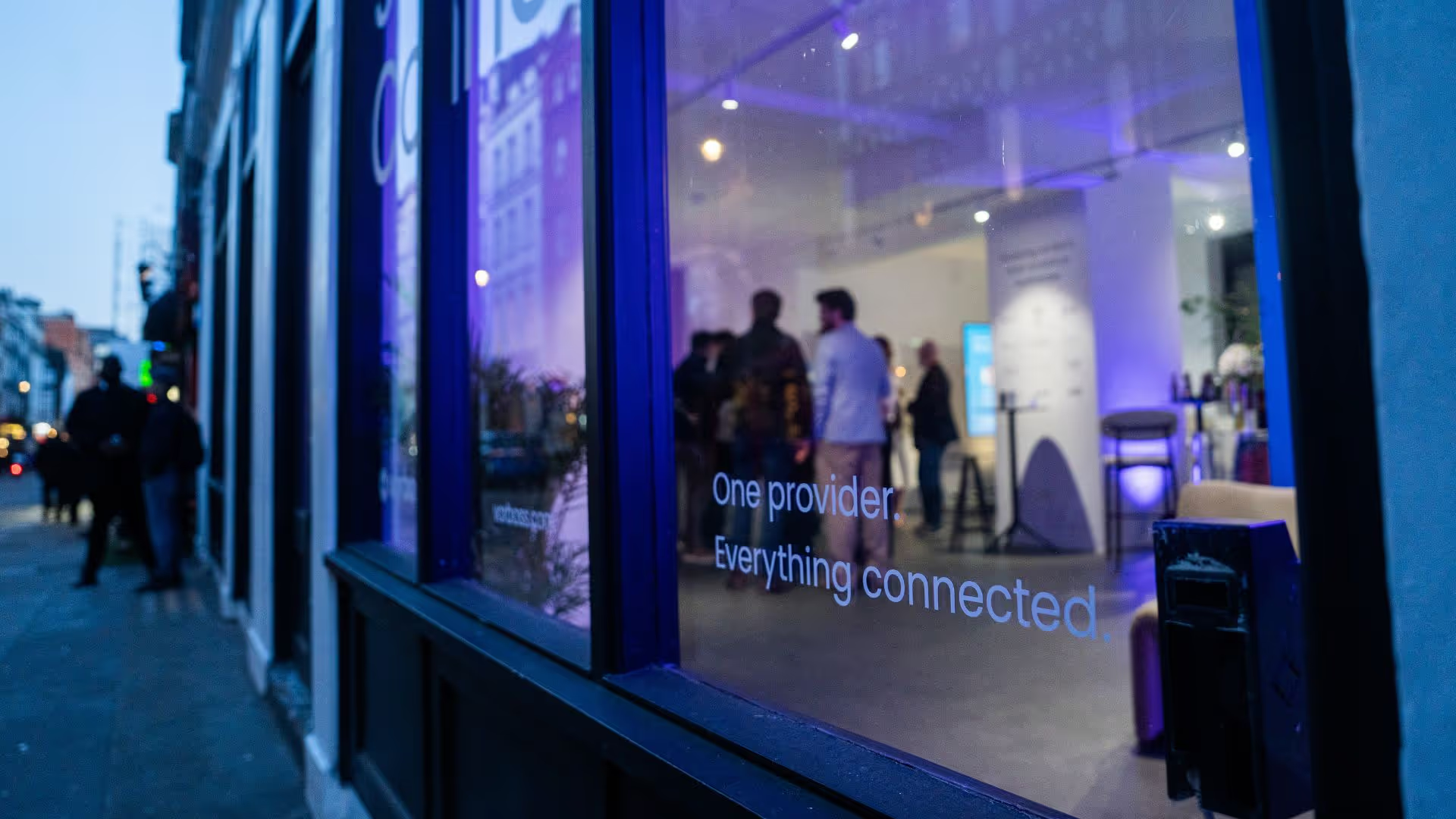

As companies grow, so does the technology behind them. Connectivity, IT and cybersecurity often end up spread across multiple suppliers, contracts and support models. Simply Connected brings it all together under one provider, making it easier to manage, easier to support, and clearer to understand costs.
At the heart of it is Vorboss’ own fibre network spanning over 900 km across London, built, owned and operated in-house, with the same team designing, installing and managing the full setup end-to-end.
“Office technology has become overcomplicated,”
said Rhod Morgan, Co-CEO at Vorboss.
“Many businesses have the right services on paper, but the experience feels disjointed. We wanted to remove the grey areas. Customers manage one relationship, have access to local support and receive one predictable monthly bill. The same team that builds the solution runs and supports it day-to-day.”
Simply Connected includes modular services that flex around each business and scale as it grows:
- Dedicated internet connectivity from Vorboss
- Fully managed office networks
- Managed IT and hardware provisioning
- Cybersecurity
- Ongoing support delivered by local London experts
Latest from the press room


LONDON, UK: 15 September 2026 – Here East, the multi-award-winning hub for innovation and creativity, today announces a strategic partnership with Vorboss to deliver dedicated 400Gbps fibre connectivity across its campus.
With demand for ultrafast, enterprise-grade connectivity accelerating, the investment will elevate the campus’s digital backbone to world-class standards, enabling organisations to innovate without limits and scale at speed.
The partnership comes as Here East cements its position as one of Europe’s most ambitious and globally competitive innovation ecosystems, with rapid growth in world-leading organisations spanning AI, advanced content production and emerging technologies.
The announcement lands at a defining moment for London’s innovation economy. In 2026 alone, the capital attracted $12.6bn in tech investment - the third highest of any city globally and the highest in Europe - while producing 12 new unicorns, more than any other European city.
Vorboss will install a core network node at Here East. Unlike a standard fibre connection, where traffic is carried back to a provider's data centre or telephone exchange, a Vorboss node means internet connectivity effectively originates from within the campus itself. This delivers dedicated 400Gbps fibre connectivity, exceptional speed, low latency, resilience and performance at a scale rarely available in urban campuses.
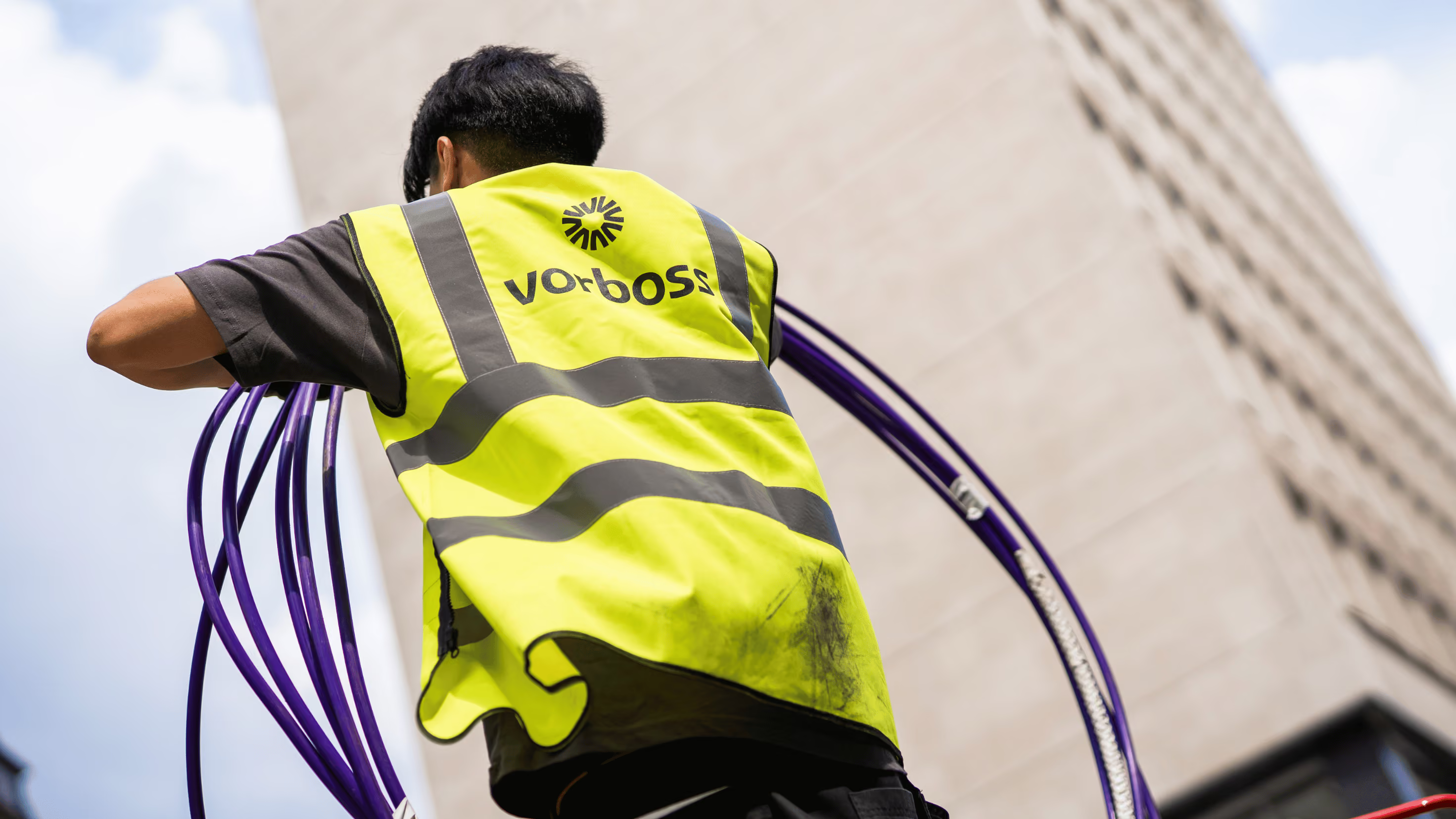
The upgrade significantly enhances Here East’s ability to support organisations operating at the frontier of innovation, from high-growth start-ups to global industry leaders. Unlike traditional providers, Vorboss owns and operates its network end-to-end, ensuring unmatched control, accountability and consistently high performance.
Located in the Queen Elizabeth Olympic Park, Here East is home to a unique concentration of pioneering institutions, global brands and creative leaders, including V&A East Storehouse, Sports Interactive, Ford Mobility, Hawk London and six global universities. More than 7,000 people collaborate, experiment and build the future on site each day, making it one of the most vibrant and influential innovation and creative communities in Europe.
By integrating Vorboss’s cutting-edge fibre network, which was built to power London’s data-hungry businesses, Here East is setting a new benchmark for connected campuses, ensuring its community can handle exponential data growth, accelerate innovation cycles and unlock entirely new frontiers of opportunity.

Gavin Poole, CEO of Here East, commented:
“Businesses working at the forefront of AI, data and content creation need infrastructure that can match their ambition and pace of change.
Here East was created to bring together the industries shaping the future - from advanced technology to the creative sector - in a single, collaborative environment. Delivering on that vision means providing not just exceptional space, but infrastructure of a truly global standard.
Our partnership with Vorboss ensures that as our ecosystem continues to grow, it is supported by the speed, scale and resilience required to lead on the world stage.”
Rhod Morgan, Co-CEO at Vorboss, added:
“Here East is exactly the kind of place our network was built for: ambitious, data-hungry organisations that need infrastructure that keeps pace with their growth.
Connecting the campus with 400Gbps means we’re bringing high-capacity infrastructure directly to one of London’s most important innovation hubs. With dedicated capacity, Here East’s tenants get the speed, resilience and headroom they need to scale without being held back by connectivity.”
ENDS
Notes to editors
About Here East
Here East is London’s multi-award-winning campus, home to more than 7,000 people working and studying on site to create at scale: from global technology companies and start-ups, to major academic institutions and pioneers in the creative industries.
Designed for cultural institutions and businesses that want the freedom to experiment, collaborate, and grow, the 1.2 million sq ft campus offers a spectrum of spaces, from creative offices to expansive warehouse studios.
The ecosystem is home to over 30 organisations, including Plexal, the innovation centre and co-working space; Sports Interactive; FORD, Human Centred Design Complex; Studio Wayne McGregor; and The Trampery on the Gantry, which provides low-cost studios for creative businesses and artists. Five of the UK’s leading universities are also based on campus, including UCL and Loughborough University London, along with major cultural institutions including the V&A East Storehouse.
Built within the former Olympic Press and Broadcast Centre, Here East is owned by clients of Delancey, a specialist real estate investment advisory company. It has been recognised by the International Olympic Committee as one of the most successful post-Olympic regeneration projects in the world.
About Vorboss
Vorboss owns and operates London’s leading dedicated business fibre network, built from the ground up for the city’s most demanding organisations. Its high-performance infrastructure delivers the speed and resilience needed by businesses working with AI, advanced content production and data-intensive technologies.
Vorboss also provides IT and Cybersecurity support and services giving businesses greater control over the technology they rely on, backed by one expert team, one number to call, and support from people who take it personally.
Media contact
For press inquiries, interviews, or further information, please contact:
● Email: press@hereeast.com
● Website: www.hereeast.com/press