One Triton Square joins London’s best-connected buildings with Vorboss 100Gbps connectivity through British Land partnership


Here are three trends we found most interesting:
1. Flexible, modular solutions beat one-size-fits-all platforms
Tenants today expect more from their offices, move-in ready spaces, the freedom to choose their providers, and contracts that fit their lease terms. That means landlords can’t rely on rigid, all-in-one platforms that don’t adapt as requirements evolve.
This is why landlords and operators are looking for specialist partners who provide modular solutions that integrate smoothly with other building systems. This gives landlords the flexibility to upgrade or switch partners without overhauling everything, and ensures tenants get the experience they expect.
2. Landlords need building tech designed around real users
A recurring frustration across the sector is that technology is often designed by consultants and delivered by contractors, yet it rarely aligns with the practical needs of those managing the building. Too often, property teams are left with systems that look impressive on paper but don’t work in practice. They need partners to understand the operational needs of their buildings in practice, not just on paper.
For landlords, investing in solutions that match day-to-day building operations not only improves usability but can also save money. Technology partners who understand what property managers and operators actually need (not just what looks good in a spec sheet) are essential for avoiding costly inefficiencies
3. Smarter use of existing infrastructure can cut costs and increase efficiency
Not every operational improvement requires new hardware. Many buildings already have the tools in place to generate useful data. Wi-Fi access points are a good example. These can be used to anonymously track space utilisation, footfall, and occupancy trends.
This data can help landlords and operators:
- Allocate bandwidth to the busiest areas.
- Adjust heating, lighting, and cleaning schedules based on actual usage.
- Optimise leasing strategies by understanding how tenants really use the space.
Are you looking for commercial technology solutions?
Vorboss can support your entire digital infrastructure: connectivity, pre-fibering, managed IT, and cybersecurity, all from a single provider. Through our acquisition of Layer8, we can help you automate building management and make day-to-day operations easier and more efficient.
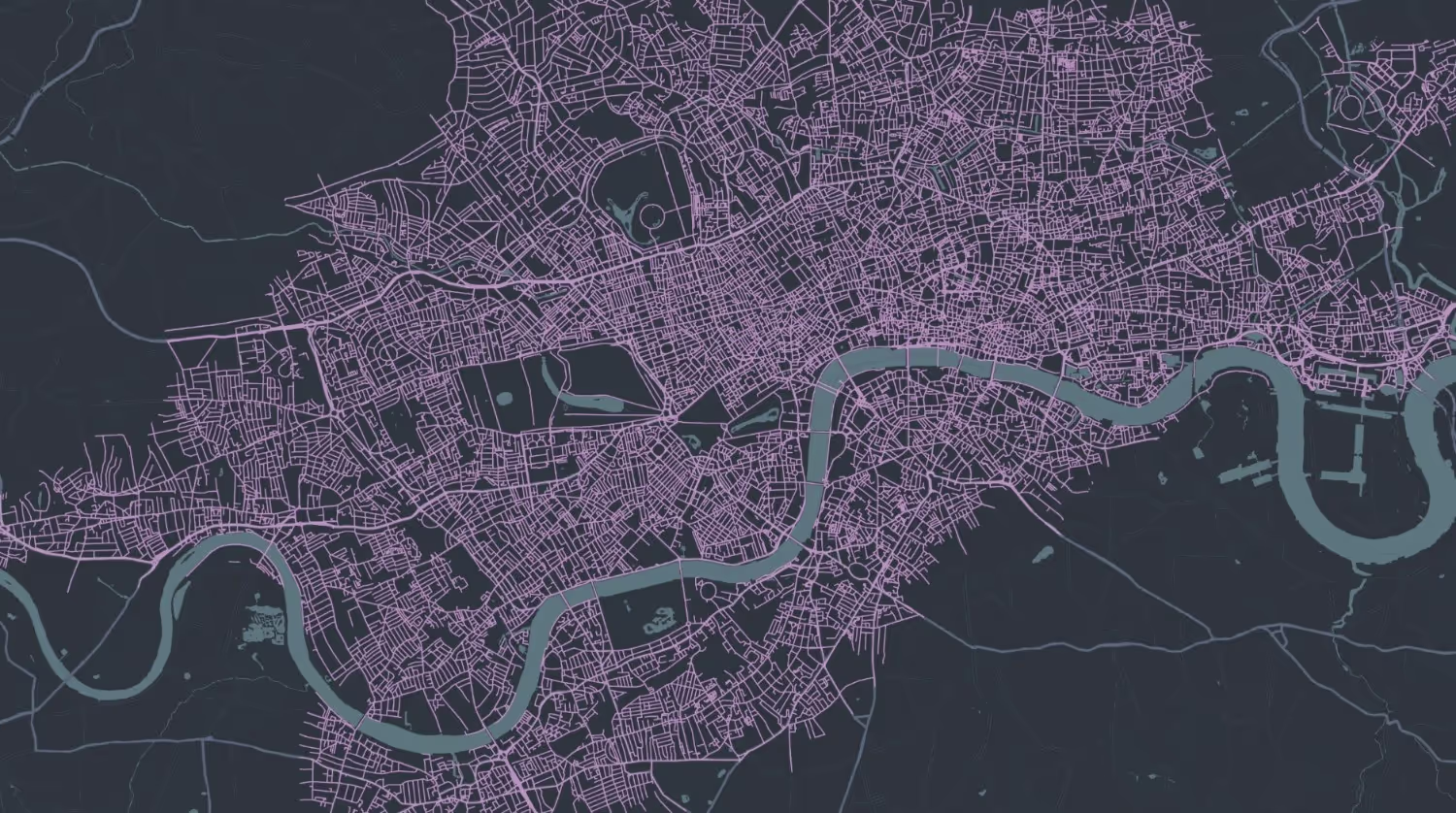
At Vorboss, we're suckers for data. And no data gets us going more than connectivity data, average speeds, and the real numbers behind Londoners’ experience online.
The regulator of that data in the UK is OfCom, the Office of Communications. Recently, we’ve dug into their internet performance by postcode report, to help us demonstrate just how much of a leap Vorboss Direct Internet is vs the typical experience of speed online that a London business might feel.
This data is free for anyone to access, and we would encourage our data hungry readers to get stuck in here.
For us at Vorboss, we were able to take this granular postcode level data and use it to identify the average speeds of the boroughs that our cable network serves, and naturally compared it to our service. We’ve translated our findings into a handy map, which you can find here.
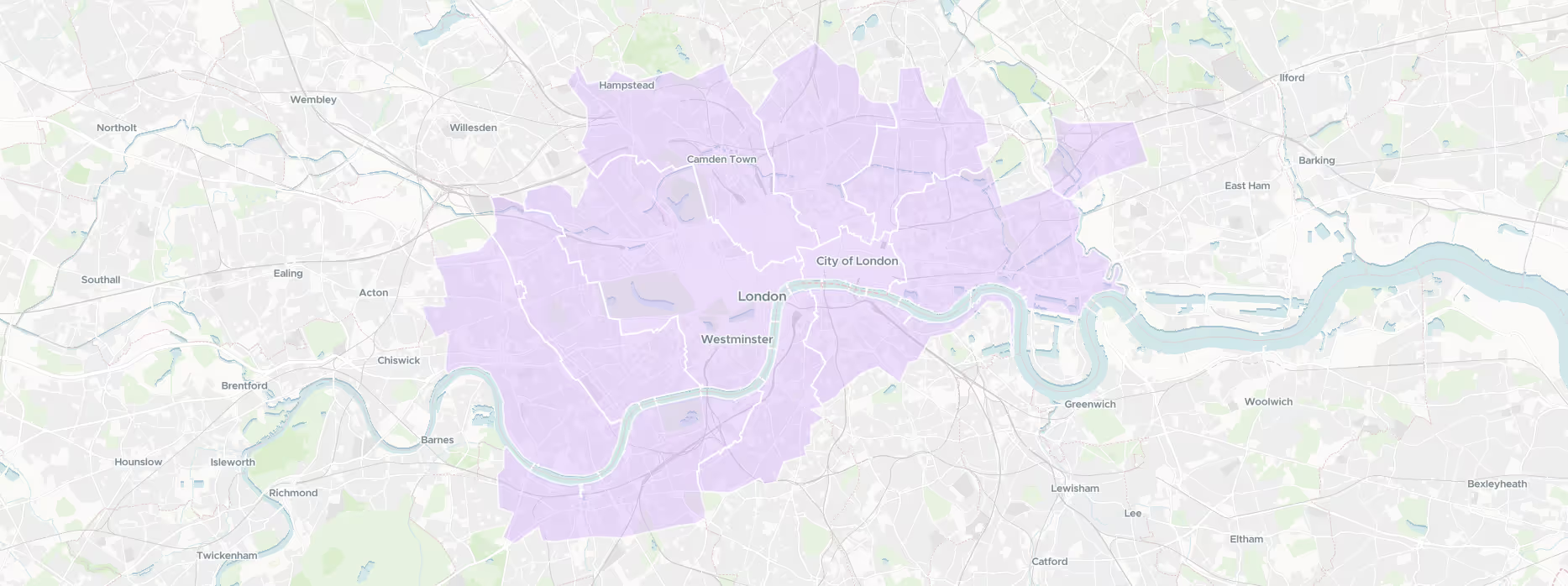
It is important to note that OfCom’s data excludes leased lines and networks deployed specifically for business. While this is frustrating because it means we can’t compare apples to apples, OfCom’s connected nations report still shows just how many businesses are getting by with only a broadband connection (known as full fibre), which are included in these numbers. For example, City of London take-up of non-leased line full fibre is 57%! Considering how large this figure is, we believe the disparity with our service is still important to highlight.
If you want to understand the differences between leased lines and broadband, and what making the switch to leased line could mean for your business, you can read our blog on this subject here.
If you’re curious to understand how Vorboss services can transform the way you work, speak to our team here.
.avif)
Internet connectivity is the lifeblood of modern businesses, powering operations, communication, and growth. But not all “fibre” connections are created equal.
All connections use fibre at some level, but performance, reliability, and guarantees vary depending on the underlying network. Choosing the right type of connection now can save downtime, frustration, and cost in the future.
In this guide, we'll explore key factors when selecting the ideal business internet provider to keep you connected and thriving.

Understand the connection types
Here’s a quick comparison of the three main fibre-based connections available to businesses:
FTTC and FTTP may work for small teams or low-risk work, but DIA is the only connection built for business-critical reliability, speed, and consistent performance.
Ask yourself these questions
Before comparing providers, clarify your internal needs:
- How critical is uptime for your business operations?
- Which teams rely heavily on cloud apps, video conferencing, or large file transfers?
- How much bandwidth do we need now, and how much will we need in 2–5 years?
- Are upload speeds as important as download speeds for our workflows?
- Would temporary downtime cause financial or reputational damage?
This self-assessment helps you match connection types to your business requirements.
.avif)
Generative Pre-trained Transformers (GPTs) like OpenAI's ChatGPT are revolutionising industries across the board. From writing emails to creating educational content, they're powerful tools built to understand and generate human-like text. But the same tech that makes GPTs useful also makes them risky, particularly for cybersecurity.
In February 2024, Microsoft and OpenAI spotted several state-backed hacking groups from Russia, North Korea, Iran, and China using GPTs to improve their exploitation tactics. The Strontium group, linked to Russian military intelligence, has been found using large language models (LLM’s) to understand satellite communication protocols, radar imaging technologies, and other sensitive miliatry information.
But GPTs can also be misused in everyday cybercrime and by employees or contractors who have access to sensitive data.
How GPTs can be weaponised in everyday cybercrime
- Phishing: GPTs can generate convincing phishing emails that mimic real writing styles, making it more difficult to spot and harder for filters to block.
- Social engineering: these models can be used in live chats, like customer support, to trick people into giving up sensitive information. Connected to text-to-speech tools, they could also be used in voice scams.
- Malware code generation: even with filters in place, attackers can trick GPTs into writing malicious code.
- Data leakage: when employees input sensitive company information into these models, that data gets stored and could be leaked back to others.
- Misinformation: GPT’s can 'hallucinate', which means they present false information portrayed as fact. When spread, this can lead to real-world consequences such as political confusion or interference during a crisis.
.avif)
How DPG overcame last-minute delays to get online in 3 weeks
Anyone who’s managed an office move understands how much coordination it takes: logistics, tight deadlines, suppliers to manage, all while keeping the day job going. But when your internet provider, a well-known legacy player, lets you down just weeks before your move, things can get really stressful.

Three months to get connected – but the provider stalled
DPG is a specialist social justice law firm. With a team of 80, they rely on secure, fast connectivity to manage sensitive legal work.
They gave their internet provider three months’ notice to install a leased line at their new office. But as the move-in date approached, the provider asked for a further 60-day extension.
With just six weeks left to go before staff were due to move in, DPG had no choice but to cancel their contract and find a new supplier.

The problem with ‘business broadband’
Most people search for ‘business broadband’ when they’re looking for internet for their office. Fair enough, it’s the term that’s been marketed to death. But here’s the thing: business broadband isn’t the only option, and most of the time, it won't meet the needs of a modern business. If you need a connection that actually keeps up, a leased line is the answer; reliable, secure, and built for multiple users.
In this blog we explain the differences between the two connections.
Broadband vs leased line explained
- Broadband: A standard, shared internet connection typically designed for home use, but sometimes used in small offices. Speeds can vary, especially during busy times, and upload speeds are often much lower than downloads – which can limit performance for modern business applications.
- Leased line: A private, dedicated connection between your premises and your provider. Symmetrical speeds, guaranteed performance, and no sharing with neighbours - specifically designed to meet the demands of modern business connectivity.
Business broadband: a closer look
Most of the time, business broadband is the same product that an ISP (Internet Service Provider) sells to their residential customers, but more expensive and probably bundled with a low-level cyber security product.
It has a dedicated web page, with stock photos of people doing business. And it comes with some comforting words to tell you that they know how hard business is. Excruciating.
Your traffic isn’t prioritised. Your connection isn’t dedicated. And if you have an ‘account manager’, they’re probably responsible for literally thousands of customers like you.
If you pay more, you might get a commitment to investigate faults within a given time – usually within a day.
When you’re looking for business broadband, bear these things in mind. Look at the details to see if you’re simply being sold a standard home broadband package disguised as a business solution.
What does great internet connectivity for business look like?
It’s very easy to call something business broadband. But it’s a very different thing to provide internet connectivity that’s genuinely fast and reliable enough for London business in 2025.
One of the fundamental features of an internet product for business is a dedicated connection.
‘Broadband’ or ‘FTTP’ (that’s Fibre to the Premise) means that the service you’re paying for is shared between you and typically 30 of your neighbours – whether they’re houses or other businesses.
So when you have a broadband or FTTP connection, don’t expect to get the Gbps speeds you’ve paid for at busy times (which is most of the working day). It’s cheap, and it connects. But it’s not a product that you can rely on to keep your business running.
At the busiest times, you'll have to hope that it’ll give you what you need. That might mean putting up with a poor-quality video call, a painful wait downloading a PowerPoint, or an eternity for every employee to log in to Teams at 9am.
Internet connectivity that you and your business can rely on is going to be dedicated to you, and that means taking a leased line (also known as DIA, or direct internet access).
What are the benefits of a leased line?
A dedicated connection means guaranteed bandwidth
With a leased line, you get every bit you pay for, unlike a shared ‘broadband’ connection, where you can pay for 1Gbps but it’s highly unlikely you’ll ever see that speed.
A connection you can rely on
Always the speed you’ve paid for and infrastructure that’s backed up by an SLA (Service Level Agreement) – and automatic compensation if you choose a really good ISP. And the ability to order a back-up line, to increase the resilience of your service.
Lower latency
The more direct architecture and quicker route to a data centre (where your connection hits the internet) means a leased line will almost always offer lower latency than a broadband connection.
Upload that matches download
Most broadband, FTTP and cable services advertise the download speed but keep quiet on upload – that’s because upload is significantly slower in these services, often as little as a tenth of the speed. Leased lines have ‘symmetrical’ download and upload.
Enhanced security
Security can never be taken for granted, so check on the Infosec and compliance qualifications of your provider – typically, those selling residential-grade services won’t invest in this area, but serious business providers recognise the huge benefit to their customers.
- Broadband: speeds vary, especially during peak times when many users share the line
- Leased line: your own private connection with speeds that never slow down
- Why it matters: faster speeds mean quicker file sharing, uninterrupted calls, and no buffering
How the two really compare
Leased line vs broadband, 13 key differences
1. Shared vs dedicated connection
- Broadband: line is shared with up to 30 users, meaning speeds vary
- Leased line: your own private, dedicated connection with speeds that never slow down
- Why it matters: a dedicated connection keeps critical work flowing without interruptions or slowdowns
2. Upload vs download speeds
- Broadband: downloads are fine, uploads are often much slower
- Leased line: symmetrical (equal upload and download speeds)
- Why it matters: symmetrical speeds mean quicker file sharing, uninterrupted video calls, and seamless cloud uploads/downloads
3. Reliability
- Broadband: line shared with others, so performance can be unreliable when usage is high
- Leased line: dedicated, uncontested connection that stays reliable
- Why it matters: a stable connection doesn't disturb business operations and maximises productivity
4. Service level agreements (SLAs)
- Broadband: uptime and fix times are not guaranteed; outages take longer to resolve
- Leased line: 99.9%+ uptime with fixed repair times, usually within a few hours
- Why it matters: no guaranteed repair times mean more downtime and distruption
5. Proactive monitoring
- Broadband: reactive, your provider might prioritise other issues over yours
- Leased line: 24/7 monitoring; problems often fixed before you notice
- Why it matters: proactive fixes mean fewer outages and smoother operations
6. Dedicated point of contact
- Broadband: no dedicated contact; expect long calls, chat bots, and slow complaint handling
- Leased line: you get a dedicated account manager you can reach directly, usually within minutes
- Why it matters: dedicated point of contact means faster responses, fixes, and no endless chasing
7. Latency (the time it takes for data to travel between you and the person or system you’re connecting to)
- Broadband: higher latency and prone to more network congestion
- Leased line: minimal delay for smooth, instant calls, file uploads etc.
- Why it matters: low latency prevents frozen video or slow cloud uploads
8. Traffic prioritisation
- Broadband: provider decides what gets priority
- Leased line: you control which activities come first (e.g., video calls, file transfers
- Why it matters: without control, important tasks can slow during busy periods
9. Truly unlimited
- Broadband: “unlimited” may come with data caps or throttling (slowing speeds after a threshold
- Leased line: No data limits or throttling; full speed at all times
- Why it matters: no data limits mean no surprise slowdowns mid-project
10. Installation time
- Broadband: a couple of weeks
- Leased line: depends on provider; Vorboss offers “Rapid Install” in as little as 48 hours
- Why it matters: slow setup can delay your business getting online
11. No phone line required
- Broadband: often tied to phone rental
- Leased line: internet-only, perfect for internet-based phone systems (VoIP)
- Why it matters: save money by ditching old-style phone lines while still making calls
12. Cost
- Broadband: cheaper monthly fees
- Leased line: higher cost, but delivers fast, reliable, uninterrupted service
- Why it matters: paying more is worth it if slow internet or downtime is slowing your team, delaying projects, or costing your business money
13. Scalability
- Broadband: limited options for upgrading bandwidth
- Leased line: easily upgraded as your business grows
- Why it matters: leased line supports business growth without needing a completely new internet connection
Feature comparison at a glance
The difference that matters: reliability
That’s the key difference between the experience of these two technologies: how much you can rely on your connection, and how that impacts your business. We see it in every customer interaction as they move from broadband to direct internet – the shackles are off.
While business broadband infrastructure is shared with the businesses and houses around you, leased line (or direct internet) infrastructure is dedicated to you – it isn’t shared with anyone.
It’s your connection, and every bit of the bandwidth you’re paying for is yours. It’s guaranteed. Always giving you the internet speed and capacity you need, no matter how busy things get.
The whole Manchester office coming down for a team day? No problem. Sending a broadcast-quality video file to a client on a deadline? Easy. Worrying about signing up to a new cloud-based software for project management? Don’t. Putting the CEO on a video call that has to be perfect? Do it.
A 10Gbps leased line ensures you always have the speed you need. It’s a service you and your business can rely on.
Installation time
- Broadband: a couple of weeks
- Leased Line: depends on provider; Vorboss offers “Rapid Install” in as little as 48 hours
- Why it matters: slow setup can delay your business getting online
11. No phone line required
- Broadband: often tied to phone rental
- Leased line: internet-only, perfect for internet-based phone systems (VoIP)
- Why it matters: save money by ditching old-style phone lines while still making calls
12. Cost
- Broadband: cheaper monthly fees
- Leased line: higher cost, but delivers fast, reliable, uninterrupted service
- Why it matters: paying more is worth it if slow internet or downtime is slowing your team, delaying projects, or costing your business money
13. Scalability
- Broadband: limited options for upgrading bandwidth
- Leased line: easily upgraded as your business grows
- Why it matters: leased line supports business growth without needing a completely new internet connection
Feature comparison at a glance
The difference that matters: reliability
That’s the key difference between the experience of these two technologies: how much you can rely on your connection, and how that impacts your business. We see it in every customer interaction as they move from broadband to direct internet – the shackles are off.
While business broadband infrastructure is shared with the businesses and houses around you, leased line (or direct internet) infrastructure is dedicated to you – it isn’t shared with anyone.
It’s your connection, and every bit of the bandwidth you’re paying for is yours. It’s guaranteed. Always giving you the internet speed and capacity you need, no matter how busy things get.
The whole Manchester office coming down for a team day? No problem. Sending a broadcast-quality video file to a client on a deadline? Easy. Worrying about signing up to a new cloud-based software for project management? Don’t. Putting the CEO on a video call that has to be perfect? Do it.
A 10Gbps leased line ensures you always have the speed you need. It’s a service you and your business can rely on.
Latest from the press room
London, UK, 13 August 2026:
Vorboss, which owns and operates London’s dedicated business fibre network, has connected One Triton Square at Regent’s Place with 100Gbps connectivity, delivering exceptional digital capacity to one of the capital’s most exciting new destinations for science, technology and innovation.

The flagship British Land and Royal London Asset Management building provides more than 300,000 sq ft of purpose-built space, bringing together fitted laboratories, flexible workspace, premium dedicated offices, and shared meeting and event space.
Located in the heart of London’s Knowledge Quarter, One Triton Square is designed to support ambitious businesses at every stage of growth. Flexible floorplates, advanced digital infrastructure and exceptional on-site amenities create an environment where emerging organisations can scale alongside established global leaders. It is workspace built for collaboration and long-term success.
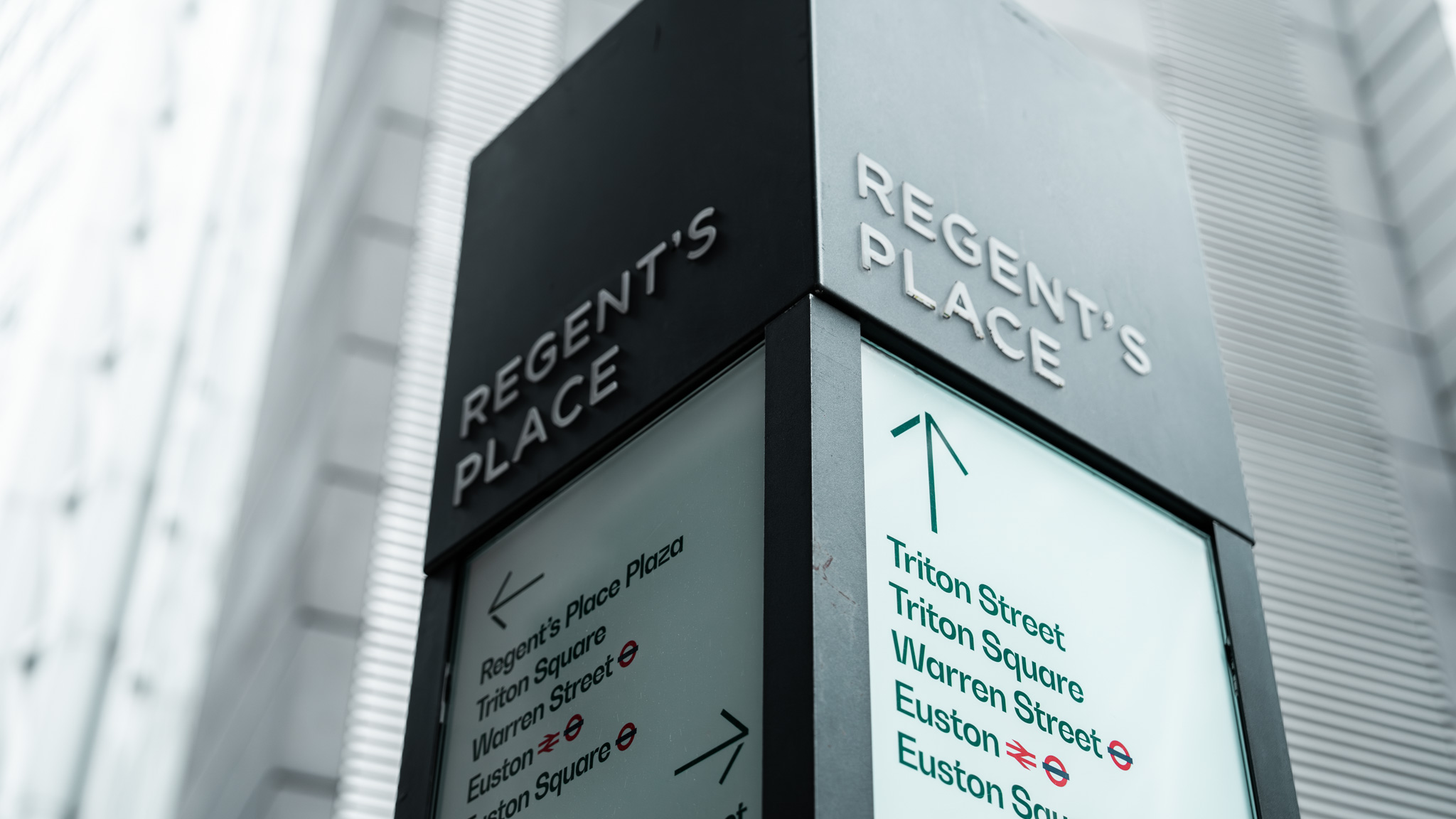
100Gbps is independently available on each floor, providing the capacity occupiers need to support increasingly data-intensive work and emerging technologies. The 100Gbps connection further reinforces One Triton Square’s position as a future-ready commercial destination.
Rhod Morgan, Co-CEO, Vorboss adds:
“Connecting One Triton Square with 100Gbps gives its occupiers the capacity they need not only for the way they work today, but for the technologies and opportunities that come next. It perfectly complements the vision British Land and Royal London Asset Management had for the building – a space designed around the needs of ambitious, innovation-led organisations”
“One Triton Square sits at the centre of London’s science and technology ecosystem, and we’re incredibly proud to be providing the infrastructure it needs to thrive.”
Simon Hepher, Head of Asset Management, Regent’s Place and Innovation Assets, British Land:
“One Triton Square is a landmark new building at the heart of Regent's Place, designed to support ambitious businesses at every stage - from agile start-ups to established global leaders. Alongside best-in-class laboratories, workspace, and offices, the building will now also offer some of the best digital connectivity in London, with 100Gbps providing occupiers the capacity they need for increasingly data-intensive work as they scale and grow.”
Mark Carroll, Property Development Director, Royal London Asset Management:
“As a long-term investor, we are focused on creating places where businesses can thrive. This investment in digital infrastructure further enhances One Triton Square's appeal to science, technology and innovation-led occupiers and supports its long-term success.”
The connection at One Triton Square forms part of Vorboss’ commitment to ensuring London has the serious digital infrastructure required to remain a leading global centre for business, science and technological innovation.
Ends.


The experience driving our growth
David has been central to our success as our Chief Financial Officer. Drawing on his experience at Zayo Group and RBC Capital Markets, he brings strong insight across large-scale infrastructure, investment banking and managed services. As our CFO, he’s been instrumental in shaping a commercial model that supports businesses as they grow, giving our customers the certainty and simplicity they expect.
Rhod has played a pivotal role in operations at Vorboss since 2020. He led the build of our network, now spanning over 900 km, and has raised industry standards across quality and efficiency, making sure our customers have a flawless experience. With previous roles at companies like Arup and WeWork, Rhod understands the complexity of London commercial real estate and knows exactly what it takes to deliver world-class technology in a fast-paced city.
The next chapter
Under David and Rhod’s leadership, we are doubling down on our commitment to keep things simple for our customers and remain the transparent, accountable provider ambitious businesses rely on as they grow.
“Vorboss is on path to becoming one of the UK’s leading B2B connectivity and managed service providers,”
says Adam Dunlop, Operating Partner at Octopus Capital and Chair of the Vorboss Board.
“With David and Rhod’s leadership, and the strength and commitment of the team across the business, I am genuinely excited about what lies ahead.”
Vorboss is part of the Fern Trading Group, managed and advised by Octopus Investments. This partnership, backed by £250million in funding, enabled us to build an independent, 100Gbps London fibre network and connect thousands of businesses across the capital. Having expanded our offering with a range of cybersecurity and managed technology solutions last year, we continue to do things differently by delivering everything end-to-end through our in-house teams.